Thursday, April 10, 2014

Museums and children: built to fail?


Does the thought of children in a museum make your heart swell? or does it make your heart stop? If the museum isn’t set up for young visitors, you’re probably on the cardiac arrest side of the equation. And it’s understandable.

The fact of the matter is, kids use museums differently than grown-ups. They’re more active and they talk more. This is how they learn and relate to the world. If museums truly want real live ACTUAL children to visit then they need to accept that children have different needs than grownups and design for those needs. If they don’t, museums are upholding unfair expectations. Children seem disruptive in galleries because galleries are not designed for their learning style. In effect, museums have set them up for failure.

One of the most fundamental problems here is the narrow definition of an appropriate experience for children to have in a museum setting. Columnist Judith Dobrzynski is becoming well-known for expressing her biases against museum experiences that look too much like fun and her thoughts on this issue is no exception. A self-described proponent of children in museums, she notes that the children she sees in museums are often “just horsing around or talking” and holds in contrast examples from the Denver Art Museum where they are actively engaging children with backpacks and programs that relate directly to the artwork on exhibit. Young visitors learn history and make art inspired by what they see on the walls. Judith deems this experience an appropriate one because she sees a clear correlation between the programming and the collection.

But Dobrzynski's underlying assumption is that every interaction a child has in a museum must be a content-driven one. When she writes dismissively about what she sees as “just play” she’s dismissing the fact that children learn by playing. In this regard, traditional museums need to take a page from the children’s museum handbook. Children’s museums (and science museums) have mission statements about sparking interest and inspiring love of learning, not delivering facts or even explaining concepts. They value attitudes and relationships over transference of knowledge.

Designing for children (and other kinesthetic learners) in museums is often mistaken for dumbing-down the museum. This speaks more to our society’s hierarchy of learning styles than anything else, but that’s another blog post. It’s this misapprehension that stokes the fears of folks like Ian Hewett who writes that such a philosophy dictates that “high culture must be brought down to the kids’ level”. He believes that art is far too complex for a child to appreciate. Incited by the bad behavior of the notorious grownups at the Tate Museum who let their kids climb all over a Donald Judd sculpture, he suggests that the pendulum is swinging in such a child-centric direction that eventually all hell will break loose and ultimately concludes that we simply cannot accommodate children in museums at all and they should be banned from museums altogether.

Of course there are plenty of museum professionals who disagree with Hewett. Educator Sarah Erdman encourages parents to visit museums with their babies. Not only does a museum visit serve the interests of a parent who wants a break from the isolated world of Cheerios and laundry (so much laundry), it can also delight infants with some of their favorite things: bright colors, photos of human faces, and the voice of their parent as they excitedly narrate their experience.

I wish Ian had been with me at the Museum of Fine Arts in Boston last weekend (really, not really) to see an infant in his mother’s arms go gaga for their Quilts and Color exhibit. The baby may not have comprehended the history of the quilts or the color theory that his parents were interested in, but he was enjoying art with his family in a developmentally appropriate way. I felt bad that his mom felt like she had to shush his squeals of delight in the quiet gallery.

“We should be thrilled when even young children respond so enthusiastically ... Isn’t this exactly what we want?” 
Dea Birkett, Director of Kids in Museums, The Telegraph

Setting realistic expectations for children in museums comes down to what we in the children’s museum field call “ages and stages”. A three-year-old has very different needs and capabilities than a seven-year-old or a thirteen-year-old so exhibit developers match their expectations for children to their development and design experiences that meet their widely varying needs simultaneously. And children's museums always try to make sure the experience is just as engaging for grownups because let’s face it, the kids didn’t drive themselves to the museum. Creating multi-layered experiences is challenging, but it’s not impossible.
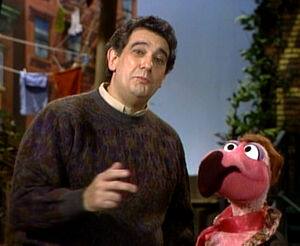

Sesame Street is a classic example of a successful multi-layered experience. Do the kids know who Placido Domingo is? Nope. Do they still get a kick out of Placido Flamingo? Absolutely.

As educator Cate Bayles succinctly states, “children breathe life into museums”. And deep down, most of us really do want children in our museums- even if it’s just to entice their parents. But making room for children in museums has its implications. What does it mean to truly invite children to the museum?

Sunday, December 22, 2013

Take it from children's museums- these toys are for everyone


Around this time of year the discussion about girl toys vs. boy toys gets particularly lively. Most of us who are concerned about the strict gendering of toys are in agreement: the way toys are designed and marketed is sexist and harmful to children. But all too often these discussions take a turn away from discussing the limitations this puts on children and starts maligning toys meant for girls and upholding boy toys as somehow better.

I’d like to argue for a more inclusive way of talking about toys. Instead of using the word “girly” as a synonym for “dopey” or “frivolous” or referring to “playing with dolls” in a dismissive way, let’s recognize the value of “girl” and “boy” toys. To say that playing with dolls is not as important as playing with blocks, we are creating a hierarchy of play and sending children the message that some interests are better than others.

And it has implications on the professions that grow out of these interests- it’s no secret that the salaries in the male-dominated engineering (building stuff) field are much higher than the salaries in the female-dominated teaching (communicating and taking care of people) field.

Here are three toys that are generally thought of as being for girls and why they are not to be dismissed. In fact these toys are so important that children’s museums include them in their exhibits, and though I’m completely biased, I happen to think that’s a great metric for evaluating a play experience.

1. Baby Dolls
A boy and girl with baby dolls at the Iowa Children's Museum 
Photo by Jody Landers.
These are some of the best dolls you can get. Unlike fashion dolls, they are realistic and often anatomically correct and their skin comes in a variety of colors. In their day-to-day lives, children are completely dependent on grownups and it can be extremely rewarding to flip things and become someone who takes care of someone else for a change. And children know just what to do. They rock the baby in their arms, sing to it, feed it, and change its diapers. When children imagine the feelings and needs of others, they are building empathy skills and those will serve them well regardless of whether they want to become parents themselves one day.

2. Dollhouses 
Historic dollhouse on display at Boston Children's Museum.
Dollhouses make a child’s familiar world small and easy to manipulate. The scale gives children control over things they have no control over in real life and allows them to act out scenarios between characters. Storytelling and dialogue are ways that children learn valuable communication and interpersonal skills. When two or more children play together with a dollhouse, the negotiation skills they develop are valuable too.

3. Play Kitchens
The Rainbow Market at Children's Discovery Museum of 
San Jose features a play kitchen with child-sized appliances.
In a world where counters are hard to reach, a scaled-down anything is exciting and kitchens are no exception. Real kitchens are not particularly child-friendly places to play, but they are a central part of daily life in a society that eats three times a day. When there is nothing to mash or stir, children often need to be shooed out of kitchens for their own safety. Play kitchens give children a safe opportunity to emulate grownups independently and begin to develop healthy personal relationships with food, eating, and cooking.


Resources:

Monday, September 9, 2013

Leaning in, full throttle

I would have had a perfect score on my motorcycle driving test if it hadn't been for the part where you're asked to perform a "sudden stop". I was so focused on the goal of performing this stop that I let back on the throttle well before my mark. I braked too soon and lost points.

"Don't put on the brakes. Accelerate." Sheryl Sandberg
I'm reading Sheryl Sandberg's book Lean In and I just finished Chapter 7, “Don't Leave Before You Leave.” It's all about women putting the brakes on their careers long before children are even a glimmer in their eyes, deciding not to take promotions and pursue demanding positions in anticipation of maybe someday becoming a parent.

From the driving test anecdote above, you've probably gathered that I think ahead- sometimes to a fault. And Sheryl Sandberg clearly states in Chapter 7, "When it comes to integrating career and family, planning too far in advance can close doors rather than open them." This concept makes sense to me. But I know I'm a planner and for now, I'm choosing to work with this tendency instead of against it:

I am pursuing my career with wild abandon because I know I would like to someday be a parent.

Now, I'm reluctant to talk about this because I’m sure it’s frustrating for parents to hear a non-parent talking about parenting. Also it's personal. I'm fighting this trepidation because I haven't heard anyone of my generation discussing this subject and this is a conversation that I want to have with my fellow museum professionals.

For me, being a parent will likely involve dialing back my career for a few years. I'll want to have reached a certain level in my career before I focus on children so I can more easily pick up where I left off. It's also important for me to co-parent in an equitable way so I want to be able to financially support my partner as well as my kids if need be. It may seem a little extreme, but I'm saving up now. I don't want anything or anyone to limit my or my family's options. That said, I acknowledge my privilege as a middle-class individual for whom having a career or a family are both choices.

Oh but you're still young, you might say, What if you change your mind? And you're right, that might happen- I change my mind about stuff all the time. But if when I'm older and have decided not to have children, I'll be reveling in my career and have a whole lot of money saved up. Maybe I'll buy a second home in Paris. Or maybe just some nice things at Whole Foods.

As someone who is excited about the prospect of parenting one day, I'm putting my tendency to plan ahead to work for me. I know I’ll be tapping on the brakes at some point but instead of focusing on that now, I’ll do my best to lay the groundwork for a future in which I can choose how I want to have a career and a family, however that ends up playing out in my life, regardless of my gender.


Thursday, June 27, 2013

American Family, Revisited

Happy Pride, museum-geeks! It's been an historic week with Supreme Court decisions to overturn DOMA and dismiss Prop 8 here in California, all in the last few days of Pride Month. We have plenty of reasons to be merry and gay. But for all the progress we've made lately, it's clear we still have a long way to go. Just a couple weeks ago a lesbian family was denied a family membership at their local children's museum. Luckily, children's museums are in the unique position to directly affect change and we do it every day by empowering children in the development of their imaginations. A strong imagination is a powerful tool in learning empathy and empathy is what drives movements of social justice.

Back in April I spoke about this at Pecha Kucha Night at the Association of Children's Museums conference in Pittsburgh. I got such positive feedback that evening that I decided to turn my presentation into a video.

Here it is:


Thursday, January 24, 2013

Women in museums: over-represented and underpaid

...our journey is not complete until our wives, our mothers, and daughters can earn a living equal to their efforts.
President Barack Obama

As soon as the 2012 AAM National Comparative Museum Salary Study came out, I was on their website downloading my free copy. It's the first publication of its kind for the museum field and I'm thrilled to have access to a resource like this. You can download it for free too if you're an AAM member.  The biggest downfall of the study, which is admitted outright in Chapter 1, is its omission of the Mid-Atlantic and the West Coast. Without their representation this study leaves out New York, Los Angeles, and Washington DC, three of the top five "Most [Economically] Important Cities" ranked by Business Insider. As disappointing as that is, I'm confident the next Salary Study AAM publishes will include all 50 states. My real disappointment (note: not surprise) came later when I started to read the data.

Two thirds of the survey respondents were women and they outnumbered men in all but 8 of the 48 positions highlighted in the survey. And yet, a quick scan down each page reveals that, "Although women usually fill the majority of jobs in each position, it is clear from these tables that they typically receive less pay than their male peers." (26) Even though 60% of CFOs in museums are women and even though 57% of executive directors are women, men are making higher salaries. Not only are women not compensated equally, it's often women who are involved in making those decisions.

There are a lot of reasons why women make less than men. Not one of them is a good excuse. Change won't happen overnight, but there are a few things we can start doing right away. I recommend reading, Women Don't Ask by Linda Babcock and Sara Laschever. Regardless of how victim-blamey the title sounds, it's a useful book for anyone who avoids negotiation or could use some advice on self-advocacy.

Here's my call to arms, fellow Emerging Museum Professionals: let's take on those director-level positions, mentor the women in our lives in self-advocacy, then ensure that the women we hire receive the same salaries as men in the same positions. While we're at it we need to hire people of color (according to AAM's "data snapshot", the museum workforce is 79.4% white) and recognize the artistic and scientific achievement of women and people of color in our museums, but that's another blog post (or rather a whole lot of other blog posts).

It's unacceptable for any field, let alone a female-dominated one, to pay women less than men and it is completely within our power as museum professionals to change this. In fact, we're the only ones who can.


Thursday, November 29, 2012

Who's in a family? 3 ways museums can welcome all families


If your museum doesn’t consider “families” its core audience group, it probably should. Now more than ever, most people coming to museums are visiting in family groups. Through research initiatives like the Family Learning Forum, we’ve come to know the benefits of inviting families into museums- for us and our communities. And if you didn't notice, the Family Learning Forum is a project of the USS Constitution Museum, a history museum. Catering to families is no longer solely the realm of children's museums. In an effort to serve families better, science centers are incorporating early childhood spaces and art museums are developing backpacks full of materials to engage children in their galleries.

Families are the units of our visitorship. When we offer family rates, family passes, and family memberships it’s important for us to think about what we mean by the word “family” and the assumptions we might make about what a family looks like, how many family members there are, and who’s who based on gender, race, and age.

Here are three ways to help make our museums more welcoming places for all families:


1. Define (or better yet, explicitly refrain from defining) your institution’s understanding of the word “family” in broad terms, somewhere prominent, like on your website or at the admissions desk. 

This is the easiest step to take in welcoming all families to your museum. Craft some language to let folks know that their family is welcome and won’t be scrutinized. Yerba Buena Center for the Arts in San Francisco does this simply and elegantly on their Family Pass.
"You define family - not us!"

2. Use the word “grown-up” “caregiver” or “adult” instead of “parent” “mom/dad” “grandparent” etc.

This suggestion can be used in signage as well as in conversations between visitors and floor staff. You don’t know who is accompanying a child to the museum, so avoid alienating your visitor or embarrassing yourself by keeping your language neutral and not making assumptions about relationships between family members. 

Examples of non-neutral language: 
  •  Family membership is limited to members of a single household.
  • Are you lost? Let’s go find your Mom.
  • Your granddaughter is so smart!
  • Is Dad at home today?
Examples of family-inclusive language:
  • All children must be accompanied by an adult caregiver. 
  • Uh-oh! Where's your grownup? 
  • Is this little-one with you? 
  • You all look like you’re having fun today! 

Family-inclusive signage at Boston Children's Museum

3. Make your policies fit your philosophy, not the other way around. 

If you've decided to tell your visitors that you support and validate their personal definition of "family", you might be worried that you'll start losing money on family passes and family memberships. Don't let that deter you from continuing to offer them, just change the way you think about them. Try offering memberships at rates based on the number of adults and children they want to put on the membership card. Before changing your family pass policy, try the Yerba Buena model- you might be surprised at how few people try and take advantage. And if it doesn't work, you can always institute a cap number later.

"And how many people would you like to put on your family membership?"

How does your museum welcome all families?

Tuesday, August 7, 2012

American Family at Children's Discovery Museum

Yesterday we installed this little photography show in the art gallery at Children’s Discovery Museum and in the few hours it's been open, the response has been overwhelmingly positive. Not only is the content of the show exciting to me, it was a particular pleasure to collaborate on a project that came together so quickly- just a few weeks, concept to install. With a quick timeline and the promise of a limited engagement, we were able to work in a way that felt much more experimental and responsive than what I'm used to.


I collaborated with art educator and gallery curator Lisa Ellsworth to plan, design and install American Family. She chose seven photographs from Courteney Coolidge’s American Families project to highlight one Bay Area family with two gay moms. To make sure the show felt relevant for all our visitors, Lisa developed an interpretive approach that focuses on the meaning of family and we wrote labels in the form of questions that invite visitors to talk about their own families.

The show opened just in time for San Jose Pride weekend, August 18-19. The Pride festival takes place on the Museum’s front lawn and this is the first year we’ll have Pride-related offerings in the museum itself.

The gallery is in a challenging space- it's part of a hallway that extends around a corner, framed by bathrooms and a defibrillator unit. Most visitors take a glance down the hall and if they don’t have to pee, say, “Oh, there’s nothing down this way- let’s go back downstairs.” Not exactly prime real estate.


But we made the most of it. We placed the larger photographs in strategic sight lines to draw interest from down the hall and positioned a table and chairs in the center to invite the kind of thoughtful lingering that we hoped would happen in our talk-back station. The photos are hung at kid-height so children know the photos are for them and for a bit of extra fun we extended the gallery experience into the rest of the second floor of the museum by including additional questions in places like the bathroom and the elevator.


As soon as the gallery opened, grown-ups were reading the questions on the wall to their children and the clips in the talk-back station filled up immediately. Many visitors have said they really like the photographs and Lisa and I are happy to see visitors spending more time in the art gallery. We're already talking about what's next.

ShareThis