Showing posts with label children. Show all posts

Sunday, February 15, 2015

It's time for sexism to exit through the gift shop

Striving to be gender inclusive- except in the gift shop.

When I was in college I had a job as a cashier in the gift shop at a children's museum. While I loved working at the museum, I didn't like working in the gift shop. It seemed to be the place in the museum that brought out the worst in people, children and grownups alike. A family who would spend the afternoon strolling through the exhibits, laughing and enjoying each others' company would end their visit in the gift shop, playing out the roles of whiny, wheedling children and bribing, manipulative adults.

But even more disturbing than the tantrums, bargaining, and empty threats, was the way families who had happily played dress-up with their boys and built block towers with their girls would pass over the gift shop threshold and suddenly become staunch gender-enforcers.

I vividly remember witnessing one such instance:

A mother and son were perusing the gift shop's one-dollar bins. Among the piles of cheap plastic toys the little boy, maybe four years old, settled on a pencil. A pencil. It was the color of bubble gum and had a matching pink downy feather sprouting out of where the eraser should have been. He smiled and held it up for his mother to see, absentmindedly stroking his cheek with the soft feather. She frowned at him and shook her head.

"No!" she said emphatically. "Pick something else."

Then she said something that made my stomach turn: "What would your father say?"

Now, it wasn't the museum's fault that this interaction happened in their gift shop. The pencil didn't say "girl" on it and it wasn't in a bin marked "girls". But it made me realize that the values that we were promoting in the rest of the museum (like gender equity) seemed to stop at the gift shop.

It is well-documented that when girls are reminded of their gender they tend to perform worse on academic tests. This phenomenon is known as stereotype threat and it happens when women internalize expectations that they won't be good at certain subjects like math or science. Many museums take this to heart and are careful to include representation of girls in their STEM exhibits by featuring girl characters, female pronouns, and profiles of important women in STEM professions. Likewise, many museums also won't discourage boys from trying on dresses, playing house, and caring for dolls in their exhibits.

The offerings in the exhibits reflect the museum's values, which educators and exhibit developers take very seriously. However, when it comes to gift shop offerings, a lot of museums will defer culpability. Our gift shop is run by an external vendor, they say with a shrug. We don't pick what gets sold or how it's displayed. Maybe true, but do you really have no say? What about that time you demanded that the cafe (also run by an external vendor) take peanuts off the menu? And don't try explaining that there's precedent for non-mission-aligned offerings because your cafe sells corn dogs next to the healthy eating exhibit. That's not an excuse, that's just hypocrisy. Get on that!

In a recent blog post on Let Clothes Be Clothes, the author asks London's Natural History Museum to imagine that the tops in their gift shop, "...aren’t t-shirts, but mini exhibits, and this exhibition is advertised to and for boys only – would that be acceptable? The Sciences are not a girl-free zone, and should never be promoted to children as such." Likewise, a post on Nerd in the Brain just articulated everything wrong with the unfortunate girls-only science books on sale at their local science museum. Namely that the books are "for girls" because they focus on the biology of flowers or the chemistry of baking muffins. Because boys don't want to bake muffins? Tell that to all the boys you didn't kick out of the play kitchen exhibit upstairs because they were busy pretending to bake. What message does it send to our visitors when they spend their whole museum visit exploring their interests freely, only to be packed back into little pink and blue boxes when they arrive in the gift shop?

This is about consistency of messaging so if it helps, think of it as branding. And it may be easier to improve than you think. Here are some suggestions for making the gift shop more gender inclusive, regardless of whether or not it's run by an external vendor:
  • Refuse to carry gender-labeled items. This means no "Girls Only" science books and equal-opportunity dinosaurs.
  • Do away with "girl" and "boy" sections. Group by age or interest instead.
  • Run training sessions for staff so they can help customers in ways that don't make assumptions. For example, give them the language to respond to a customer who is shopping "for a girl" by asking questions about the girl's interests rather than automatically pointing the customer at anything pink.
  • Make visible the efforts you are putting into promoting gender equity throughout the museum. Consider signage that points out specific design or content decisions you made and why you made them. If visitors have access to that knowledge, they might become more conscious of their own biases and assumptions about their children and themselves.
Our values are only as strong as our demonstrations of those values. The museum's mission shouldn't stop at the gift shop door.

Monday, October 27, 2014

Guest post on the Western Museum Association blog

Nick Cave's "Freeport" at Peabody Essex Museum exemplifies an art exhibit with multigenerational appeal. Photo courtesy of Lauren Pazzaneze of Junkyard Arts.


 I love writing guest posts for other blogs so naturally I was thrilled when the Western Museum Association asked me to contribute. I saw it as the perfect opportunity to sit down with some of my colleagues at Boston Children's Museum and pick their brains.

I interviewed Director of Exhibitions Kate Marciniec and Arts Program Manager Alice Vogler and they shared with me their expertise and advice about how the museum field can look to children's museums to learn how to create exhibitions that successfully engage children and their families. The piece is called Bring the Family: Children's Museum Wisdom for the Rest of the Museum Community.

Here's how it starts:

So your museum wants to welcome families with children. You already know that welcoming families better serves the community and it also increases visitorship as the youngest visitors today are the members and donors of tomorrow.

But where to begin? A great way to start is by consulting the experts. And when it comes to designing multigenerational social learning experiences, children’s museums are certainly the experts. 
Note, I said, “multigenerational social learning experiences” and not “exhibits for children.” Because that’s the best-kept secret of the children’s museum—we actually design for grownups too. Kids don’t visit museums on their own—their adult caregivers are the ones deciding whether to stay and explore, or even to visit at all. Keeping adults entertained and engaged is key to creating great experiences for our young visitors.

Head on over to the Western Museum Association blog for the rest of the article.

Tuesday, September 30, 2014

Preparing art museums for children


Why is there is so much advice out there for adults about how to take children to museums? Articles are cropping up all over the place with titles like, Preparing Children for Art MuseumsWhen Can I Take My Kid to a Museum? and (my personal favorite) Taking Your Kid to the Museum Doesn’t Have to be MiserableThis trend is drawing attention to a very real issue that has nothing to do with whether adults are “equipped” to take their children to museums or if children are “ready” to be museum visitors. It's about museums creating learning experiences that work well for families.

For the most part, the suggestions in these guides are spot-on: start with your child’s interests, narrow your focus, take lots of breaks. But then some of the suggestions are a little baffling. Dr. Kimberlee L. Kiehl, director of the Smithsonian Early Enrichment Center (SEEC) makes a very thoughtful case for bringing children to museums, but at one point she recommends that since you can’t handle things in traditional collecting museums, you should bring toys to touch. Of course her recommendation is a practical one, but I hope the museums to which she refers (one has to wonder if she is implicating the Smithsonians here) are taking notes.

In another interview, Tricia Blasko, Curator of Education of the Racine Art Museum also has some excellent recommendations but then goes on to suggest that parents make their own scavenger hunt. Really? Scavenger hunts are the art museum version of the paper diner placemat that comes with crayons. It’s the most basic thing art museums have devised in the history of “quick! we forgot to make something for the kiddos”. Maybe they’re ubiquitous because they work, but if that's the case it seems simple enough to get the intern to make one up and leave some photocopies at the front desk, right?

People clearly want to bring their children to museums. We know museum visits do wonders for child development. The internet is abuzz with tips and tricks to hack your museum visit to make it more child-friendly. So here’s a crazy idea: why don’t we take the advice ourselves and make our museums easier for families to visit? I've compiled three examples of advice for visitors along with a few suggestions for how we can implement that advice so they don't have to. And here's a freebie: don't make families bring their own scavenger hunt- offer them one when they come in the door.

1. Look and Talk Together

"...encourage the children to hone their powers of observation by playing a game like I spy." Sharon Harding, How To Enjoy Art With Your Children
Most people don't feel comfortable having conversations about art, especially with children. But social interaction is so important in a museum. People learn and create memories by talking about what they're seeing. Additionally, visitors who are having engaging conversations are more likely to linger in the galleries.

To encourage dialogue between caregivers and children in the gallery, use brief, easy-to-read labels to give adults quick shots of background information and scripts to inspire their conversation. It's an incredibly effective technique in children's museums. Adults will read the questions right off the walls and it's an automatic conversation starter. Use temporary labels and observe visitors reading them in the galleries to see what questions are the juiciest.

An example of script-style interpretation in the exhibit, American Family at Children's Discovery Museum of San Jose

2. Review the Rules 

"Explaining to children in advance behavioral expectations (such as no touching) allows children to be prepared before their visit." Tricia Blasko, Preparing Children for Art Museums
Museum behavior rules are specific to museums. To set kids up to succeed (read: not get reprimanded in the galleries) we have to introduce them to our expectations and explain why we have these rules in place. Once children know what's expected of them, they'll feel comfortable, confident, and welcome in museums. That is, as long as our expectations are realistic. This is a great excuse to review the rules and toss out the ones that aren't there to protect the art and the visitors. It's worth reexamining policies that ban photos, cell phones, and talking.

A simple list of rules on the gallery map or website isn't enough- again, you're just putting the burden on the adult caregivers. Instead, use a direct approach that puts an emphasis on children having a positive visit. This could be a welcome speech from a visitor services representative, a complimentary intro tour for new visitors, an introductory gallery exhibit, or a video like this one from the Milwaukee Art Museum:


3. Limit Time 

“Don't plan on spending a full day in a museum or the entire family is likely to end up exhausted and grumpy.” Lisa Goodmurphy, 9 Tips for Taking Kids to an Art Museum
This is one of the best pieces of advice and it's the hardest to implement in real life. If a visitor spends $25 for each adult admission ticket, it's hard to justify leaving after only a few hours- which is probably all the kids can handle realistically. What if families could pay for a half day visit? Parking garages have reliable systems in place for charging people incrementally. Of course one pre-existing solution is membership, but that only works for local visitors and even if they want to be members, it's a big commitment to put the money down all at once. The St. Louis Art Museum and Yerba Buena Center for the Arts in San Francisco both offer gym-style memberships with recurring monthly payments.

Those are long term solutions. In the meantime, look around the museum and take note of all the opportunities visitors have to take a break and recharge. Cafeterias, picnic spots, gardens, and cozy nooks are essential museum amenities. Are there ways to make those spaces even more effective?

Child-sized museum fatigue. Photo by Babak Fakhamzadeh. 

In conclusion, we have work to do. But the good news is, visitors care about taking their children to museums. So much so that they want to help other visitors have positive museum experiences with their families. And museum educators are brimming with thoughtful solutions. People love museums and want to share that passion with their families. Just imagine how much more they’d love museums if we designed our exhibits with their families in mind.


Saturday, July 19, 2014

Q&A on NPR's education blog

I'm thrilled to announce that my Q&A with NPR's Juana Summers just went live. You can read it on NPR's education blog here.

Screen captures from the NPR blog. Weird quote, but hey whatever, I'm just going to go with it.


Here's an excerpt from the Q&A:
We usually associate kinesthetic learning, learning by doing, with children and therefore as a lesser learning style than say, sitting in a lecture hall. Not only is that offensive to children, it's also just not true. We seem to have this bias that learning can't look like fun, and that's a pretty dreary way of looking at the world. Grown-ups and children alike learn in a whole range of ways and while sometimes learning looks like sitting down and being quiet — which can be very enjoyable — it's just one type of learning and it's certainly no better than other types of learning. In children's museums, we design experiences that engage the senses, stimulate the imagination, and encourage social interaction. Experiences that engage lots of different parts of the brain are particularly personal, memorable, and enjoyable and it looks like play — because it is.


Juana found my article on the Incluseum blog which led her to my post about kids in traditional museums. She interviewed me over the phone for this piece as part of a series that she's doing about play and learning. I'm so grateful to the Incluseum for the exposure that got me noticed by NPR.


Thursday, April 10, 2014

Museums and children: built to fail?


Does the thought of children in a museum make your heart swell? or does it make your heart stop? If the museum isn’t set up for young visitors, you’re probably on the cardiac arrest side of the equation. And it’s understandable.

The fact of the matter is, kids use museums differently than grown-ups. They’re more active and they talk more. This is how they learn and relate to the world. If museums truly want real live ACTUAL children to visit then they need to accept that children have different needs than grownups and design for those needs. If they don’t, museums are upholding unfair expectations. Children seem disruptive in galleries because galleries are not designed for their learning style. In effect, museums have set them up for failure.

One of the most fundamental problems here is the narrow definition of an appropriate experience for children to have in a museum setting. Columnist Judith Dobrzynski is becoming well-known for expressing her biases against museum experiences that look too much like fun and her thoughts on this issue is no exception. A self-described proponent of children in museums, she notes that the children she sees in museums are often “just horsing around or talking” and holds in contrast examples from the Denver Art Museum where they are actively engaging children with backpacks and programs that relate directly to the artwork on exhibit. Young visitors learn history and make art inspired by what they see on the walls. Judith deems this experience an appropriate one because she sees a clear correlation between the programming and the collection.

But Dobrzynski's underlying assumption is that every interaction a child has in a museum must be a content-driven one. When she writes dismissively about what she sees as “just play” she’s dismissing the fact that children learn by playing. In this regard, traditional museums need to take a page from the children’s museum handbook. Children’s museums (and science museums) have mission statements about sparking interest and inspiring love of learning, not delivering facts or even explaining concepts. They value attitudes and relationships over transference of knowledge.

Designing for children (and other kinesthetic learners) in museums is often mistaken for dumbing-down the museum. This speaks more to our society’s hierarchy of learning styles than anything else, but that’s another blog post. It’s this misapprehension that stokes the fears of folks like Ian Hewett who writes that such a philosophy dictates that “high culture must be brought down to the kids’ level”. He believes that art is far too complex for a child to appreciate. Incited by the bad behavior of the notorious grownups at the Tate Museum who let their kids climb all over a Donald Judd sculpture, he suggests that the pendulum is swinging in such a child-centric direction that eventually all hell will break loose and ultimately concludes that we simply cannot accommodate children in museums at all and they should be banned from museums altogether.

Of course there are plenty of museum professionals who disagree with Hewett. Educator Sarah Erdman encourages parents to visit museums with their babies. Not only does a museum visit serve the interests of a parent who wants a break from the isolated world of Cheerios and laundry (so much laundry), it can also delight infants with some of their favorite things: bright colors, photos of human faces, and the voice of their parent as they excitedly narrate their experience.

I wish Ian had been with me at the Museum of Fine Arts in Boston last weekend (really, not really) to see an infant in his mother’s arms go gaga for their Quilts and Color exhibit. The baby may not have comprehended the history of the quilts or the color theory that his parents were interested in, but he was enjoying art with his family in a developmentally appropriate way. I felt bad that his mom felt like she had to shush his squeals of delight in the quiet gallery.

“We should be thrilled when even young children respond so enthusiastically ... Isn’t this exactly what we want?” 
Dea Birkett, Director of Kids in Museums, The Telegraph

Setting realistic expectations for children in museums comes down to what we in the children’s museum field call “ages and stages”. A three-year-old has very different needs and capabilities than a seven-year-old or a thirteen-year-old so exhibit developers match their expectations for children to their development and design experiences that meet their widely varying needs simultaneously. And children's museums always try to make sure the experience is just as engaging for grownups because let’s face it, the kids didn’t drive themselves to the museum. Creating multi-layered experiences is challenging, but it’s not impossible.


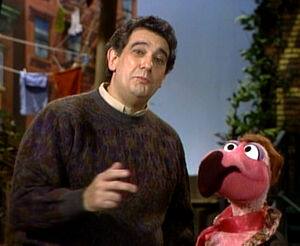
Sesame Street is a classic example of a successful multi-layered experience. Do the kids know who Placido Domingo is? Nope. Do they still get a kick out of Placido Flamingo? Absolutely.

As educator Cate Bayles succinctly states, “children breathe life into museums”. And deep down, most of us really do want children in our museums- even if it’s just to entice their parents. But making room for children in museums has its implications. What does it mean to truly invite children to the museum?

Monday, September 9, 2013

Leaning in, full throttle

I would have had a perfect score on my motorcycle driving test if it hadn't been for the part where you're asked to perform a "sudden stop". I was so focused on the goal of performing this stop that I let back on the throttle well before my mark. I braked too soon and lost points.

"Don't put on the brakes. Accelerate." Sheryl Sandberg
I'm reading Sheryl Sandberg's book Lean In and I just finished Chapter 7, “Don't Leave Before You Leave.” It's all about women putting the brakes on their careers long before children are even a glimmer in their eyes, deciding not to take promotions and pursue demanding positions in anticipation of maybe someday becoming a parent.

From the driving test anecdote above, you've probably gathered that I think ahead- sometimes to a fault. And Sheryl Sandberg clearly states in Chapter 7, "When it comes to integrating career and family, planning too far in advance can close doors rather than open them." This concept makes sense to me. But I know I'm a planner and for now, I'm choosing to work with this tendency instead of against it:

I am pursuing my career with wild abandon because I know I would like to someday be a parent.

Now, I'm reluctant to talk about this because I’m sure it’s frustrating for parents to hear a non-parent talking about parenting. Also it's personal. I'm fighting this trepidation because I haven't heard anyone of my generation discussing this subject and this is a conversation that I want to have with my fellow museum professionals.

For me, being a parent will likely involve dialing back my career for a few years. I'll want to have reached a certain level in my career before I focus on children so I can more easily pick up where I left off. It's also important for me to co-parent in an equitable way so I want to be able to financially support my partner as well as my kids if need be. It may seem a little extreme, but I'm saving up now. I don't want anything or anyone to limit my or my family's options. That said, I acknowledge my privilege as a middle-class individual for whom having a career or a family are both choices.

Oh but you're still young, you might say, What if you change your mind? And you're right, that might happen- I change my mind about stuff all the time. But if when I'm older and have decided not to have children, I'll be reveling in my career and have a whole lot of money saved up. Maybe I'll buy a second home in Paris. Or maybe just some nice things at Whole Foods.

As someone who is excited about the prospect of parenting one day, I'm putting my tendency to plan ahead to work for me. I know I’ll be tapping on the brakes at some point but instead of focusing on that now, I’ll do my best to lay the groundwork for a future in which I can choose how I want to have a career and a family, however that ends up playing out in my life, regardless of my gender.


ShareThis