Showing posts with label children and art. Show all posts

Monday, June 1, 2015

The World's a Pink Explosion: Trans Family Exhibit Ready to Bloom

Thanks to the folks at the Incluseum for featuring this project on their blog

Rendering of the traveling version of the Trans Family Photo exhibit.

The Trans Family Photo Gallery, inspired by another project of mine, American Family, is a photography exhibit designed especially for children. The pictures in the gallery offer a window into the lives of transgender woman Erica Tobias and her children and grandchildren. 

My favorite part about working on this exhibit so far has been collaborating with accomplished photographer and RISD professor, Matthew Clowney. He's been such a joy to work with and I'm feeling very privileged to play a part in his creative process. Usually I come in at the later part of the exhibit development process- the artwork is made and it's my job to display it- but in this case, I've had the chance to work closely not only with Matthew but also with the family in the pictures. I feel like I've known Erica for years. From the interviews I conducted with family members, it's clear this is just who Erica is, a generous soul who welcomes everyone in with open arms, but I still feel special. We couldn't have picked a nicer family to work with.

Matthew making pictures of the Tobias family playing at the Boston Children's Museum.
This exhibit is also my first foray into the world of crowdfunding and it's been a huge learning experience for me. I can think of a million things I'd do differently for my next attempt, but right now I'm feeling so much gratitude for all the support, both moral and financial, we've received for our exhibit. I'm not a natural marketer so this campaign business is all new. It's always little scary going out of my comfort zone, but any time I'm scared I know I must be on to something.


The song playing in the background of the video is Pink Explosion, an original song written and performed by Matthew's partner, the talented Tracie Potochnik. Tracie had seen all the pictures Matthew had made of Erica and her family and listened to interviews I'd recorded with them. Inspired by Erica's love of the color pink and the springtime flowers in bloom, Tracie's refrain captures Erica's story beautifully: "The world's a pink explosion and I guess I'm bloomin' too." My favorite lines in song are in the last verse:

My heart it feels so happy and I guess it's just because
I'm finally who I'm meant to be and who I always was.

Here I am enjoying some downtime with Erica at her home with her daughters and granddaughter.
I'm excited about making this exhibit because I think all children (and adults for that matter) need what Laverne Cox calls "Possibility Models". We need to see people of color, women, and queer people represented in museums so children of all colors, all genders, and all sexualities can see the possibilities for themselves, not just as hypotheticals but as real, breathing options. 

Children gain an understanding of gender very early on in life. Many trans* and genderqueer individuals will report knowing they were different from their cisgender peers when they were toddlers. It's inevitable that some of the children who come to see this exhibit will recognize themselves. And for those who don't recognize themselves, I hope they'll see the importance of being a supportive family member and ally.

Monday, October 27, 2014

Guest post on the Western Museum Association blog

Nick Cave's "Freeport" at Peabody Essex Museum exemplifies an art exhibit with multigenerational appeal. Photo courtesy of Lauren Pazzaneze of Junkyard Arts.


 I love writing guest posts for other blogs so naturally I was thrilled when the Western Museum Association asked me to contribute. I saw it as the perfect opportunity to sit down with some of my colleagues at Boston Children's Museum and pick their brains.

I interviewed Director of Exhibitions Kate Marciniec and Arts Program Manager Alice Vogler and they shared with me their expertise and advice about how the museum field can look to children's museums to learn how to create exhibitions that successfully engage children and their families. The piece is called Bring the Family: Children's Museum Wisdom for the Rest of the Museum Community.

Here's how it starts:

So your museum wants to welcome families with children. You already know that welcoming families better serves the community and it also increases visitorship as the youngest visitors today are the members and donors of tomorrow.

But where to begin? A great way to start is by consulting the experts. And when it comes to designing multigenerational social learning experiences, children’s museums are certainly the experts. 
Note, I said, “multigenerational social learning experiences” and not “exhibits for children.” Because that’s the best-kept secret of the children’s museum—we actually design for grownups too. Kids don’t visit museums on their own—their adult caregivers are the ones deciding whether to stay and explore, or even to visit at all. Keeping adults entertained and engaged is key to creating great experiences for our young visitors.

Head on over to the Western Museum Association blog for the rest of the article.

Tuesday, September 30, 2014

Preparing art museums for children


Why is there is so much advice out there for adults about how to take children to museums? Articles are cropping up all over the place with titles like, Preparing Children for Art MuseumsWhen Can I Take My Kid to a Museum? and (my personal favorite) Taking Your Kid to the Museum Doesn’t Have to be MiserableThis trend is drawing attention to a very real issue that has nothing to do with whether adults are “equipped” to take their children to museums or if children are “ready” to be museum visitors. It's about museums creating learning experiences that work well for families.

For the most part, the suggestions in these guides are spot-on: start with your child’s interests, narrow your focus, take lots of breaks. But then some of the suggestions are a little baffling. Dr. Kimberlee L. Kiehl, director of the Smithsonian Early Enrichment Center (SEEC) makes a very thoughtful case for bringing children to museums, but at one point she recommends that since you can’t handle things in traditional collecting museums, you should bring toys to touch. Of course her recommendation is a practical one, but I hope the museums to which she refers (one has to wonder if she is implicating the Smithsonians here) are taking notes.

In another interview, Tricia Blasko, Curator of Education of the Racine Art Museum also has some excellent recommendations but then goes on to suggest that parents make their own scavenger hunt. Really? Scavenger hunts are the art museum version of the paper diner placemat that comes with crayons. It’s the most basic thing art museums have devised in the history of “quick! we forgot to make something for the kiddos”. Maybe they’re ubiquitous because they work, but if that's the case it seems simple enough to get the intern to make one up and leave some photocopies at the front desk, right?

People clearly want to bring their children to museums. We know museum visits do wonders for child development. The internet is abuzz with tips and tricks to hack your museum visit to make it more child-friendly. So here’s a crazy idea: why don’t we take the advice ourselves and make our museums easier for families to visit? I've compiled three examples of advice for visitors along with a few suggestions for how we can implement that advice so they don't have to. And here's a freebie: don't make families bring their own scavenger hunt- offer them one when they come in the door.

1. Look and Talk Together

"...encourage the children to hone their powers of observation by playing a game like I spy." Sharon Harding, How To Enjoy Art With Your Children
Most people don't feel comfortable having conversations about art, especially with children. But social interaction is so important in a museum. People learn and create memories by talking about what they're seeing. Additionally, visitors who are having engaging conversations are more likely to linger in the galleries.

To encourage dialogue between caregivers and children in the gallery, use brief, easy-to-read labels to give adults quick shots of background information and scripts to inspire their conversation. It's an incredibly effective technique in children's museums. Adults will read the questions right off the walls and it's an automatic conversation starter. Use temporary labels and observe visitors reading them in the galleries to see what questions are the juiciest.

An example of script-style interpretation in the exhibit, American Family at Children's Discovery Museum of San Jose

2. Review the Rules 

"Explaining to children in advance behavioral expectations (such as no touching) allows children to be prepared before their visit." Tricia Blasko, Preparing Children for Art Museums
Museum behavior rules are specific to museums. To set kids up to succeed (read: not get reprimanded in the galleries) we have to introduce them to our expectations and explain why we have these rules in place. Once children know what's expected of them, they'll feel comfortable, confident, and welcome in museums. That is, as long as our expectations are realistic. This is a great excuse to review the rules and toss out the ones that aren't there to protect the art and the visitors. It's worth reexamining policies that ban photos, cell phones, and talking.

A simple list of rules on the gallery map or website isn't enough- again, you're just putting the burden on the adult caregivers. Instead, use a direct approach that puts an emphasis on children having a positive visit. This could be a welcome speech from a visitor services representative, a complimentary intro tour for new visitors, an introductory gallery exhibit, or a video like this one from the Milwaukee Art Museum:


3. Limit Time 

“Don't plan on spending a full day in a museum or the entire family is likely to end up exhausted and grumpy.” Lisa Goodmurphy, 9 Tips for Taking Kids to an Art Museum
This is one of the best pieces of advice and it's the hardest to implement in real life. If a visitor spends $25 for each adult admission ticket, it's hard to justify leaving after only a few hours- which is probably all the kids can handle realistically. What if families could pay for a half day visit? Parking garages have reliable systems in place for charging people incrementally. Of course one pre-existing solution is membership, but that only works for local visitors and even if they want to be members, it's a big commitment to put the money down all at once. The St. Louis Art Museum and Yerba Buena Center for the Arts in San Francisco both offer gym-style memberships with recurring monthly payments.

Those are long term solutions. In the meantime, look around the museum and take note of all the opportunities visitors have to take a break and recharge. Cafeterias, picnic spots, gardens, and cozy nooks are essential museum amenities. Are there ways to make those spaces even more effective?

Child-sized museum fatigue. Photo by Babak Fakhamzadeh. 

In conclusion, we have work to do. But the good news is, visitors care about taking their children to museums. So much so that they want to help other visitors have positive museum experiences with their families. And museum educators are brimming with thoughtful solutions. People love museums and want to share that passion with their families. Just imagine how much more they’d love museums if we designed our exhibits with their families in mind.


Thursday, April 10, 2014

Museums and children: built to fail?


Does the thought of children in a museum make your heart swell? or does it make your heart stop? If the museum isn’t set up for young visitors, you’re probably on the cardiac arrest side of the equation. And it’s understandable.

The fact of the matter is, kids use museums differently than grown-ups. They’re more active and they talk more. This is how they learn and relate to the world. If museums truly want real live ACTUAL children to visit then they need to accept that children have different needs than grownups and design for those needs. If they don’t, museums are upholding unfair expectations. Children seem disruptive in galleries because galleries are not designed for their learning style. In effect, museums have set them up for failure.

One of the most fundamental problems here is the narrow definition of an appropriate experience for children to have in a museum setting. Columnist Judith Dobrzynski is becoming well-known for expressing her biases against museum experiences that look too much like fun and her thoughts on this issue is no exception. A self-described proponent of children in museums, she notes that the children she sees in museums are often “just horsing around or talking” and holds in contrast examples from the Denver Art Museum where they are actively engaging children with backpacks and programs that relate directly to the artwork on exhibit. Young visitors learn history and make art inspired by what they see on the walls. Judith deems this experience an appropriate one because she sees a clear correlation between the programming and the collection.

But Dobrzynski's underlying assumption is that every interaction a child has in a museum must be a content-driven one. When she writes dismissively about what she sees as “just play” she’s dismissing the fact that children learn by playing. In this regard, traditional museums need to take a page from the children’s museum handbook. Children’s museums (and science museums) have mission statements about sparking interest and inspiring love of learning, not delivering facts or even explaining concepts. They value attitudes and relationships over transference of knowledge.

Designing for children (and other kinesthetic learners) in museums is often mistaken for dumbing-down the museum. This speaks more to our society’s hierarchy of learning styles than anything else, but that’s another blog post. It’s this misapprehension that stokes the fears of folks like Ian Hewett who writes that such a philosophy dictates that “high culture must be brought down to the kids’ level”. He believes that art is far too complex for a child to appreciate. Incited by the bad behavior of the notorious grownups at the Tate Museum who let their kids climb all over a Donald Judd sculpture, he suggests that the pendulum is swinging in such a child-centric direction that eventually all hell will break loose and ultimately concludes that we simply cannot accommodate children in museums at all and they should be banned from museums altogether.

Of course there are plenty of museum professionals who disagree with Hewett. Educator Sarah Erdman encourages parents to visit museums with their babies. Not only does a museum visit serve the interests of a parent who wants a break from the isolated world of Cheerios and laundry (so much laundry), it can also delight infants with some of their favorite things: bright colors, photos of human faces, and the voice of their parent as they excitedly narrate their experience.

I wish Ian had been with me at the Museum of Fine Arts in Boston last weekend (really, not really) to see an infant in his mother’s arms go gaga for their Quilts and Color exhibit. The baby may not have comprehended the history of the quilts or the color theory that his parents were interested in, but he was enjoying art with his family in a developmentally appropriate way. I felt bad that his mom felt like she had to shush his squeals of delight in the quiet gallery.

“We should be thrilled when even young children respond so enthusiastically ... Isn’t this exactly what we want?” 
Dea Birkett, Director of Kids in Museums, The Telegraph

Setting realistic expectations for children in museums comes down to what we in the children’s museum field call “ages and stages”. A three-year-old has very different needs and capabilities than a seven-year-old or a thirteen-year-old so exhibit developers match their expectations for children to their development and design experiences that meet their widely varying needs simultaneously. And children's museums always try to make sure the experience is just as engaging for grownups because let’s face it, the kids didn’t drive themselves to the museum. Creating multi-layered experiences is challenging, but it’s not impossible.


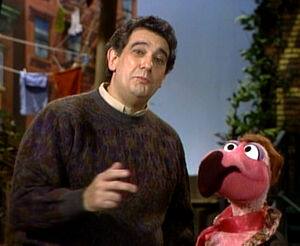
Sesame Street is a classic example of a successful multi-layered experience. Do the kids know who Placido Domingo is? Nope. Do they still get a kick out of Placido Flamingo? Absolutely.

As educator Cate Bayles succinctly states, “children breathe life into museums”. And deep down, most of us really do want children in our museums- even if it’s just to entice their parents. But making room for children in museums has its implications. What does it mean to truly invite children to the museum?

Tuesday, August 7, 2012

American Family at Children's Discovery Museum

Yesterday we installed this little photography show in the art gallery at Children’s Discovery Museum and in the few hours it's been open, the response has been overwhelmingly positive. Not only is the content of the show exciting to me, it was a particular pleasure to collaborate on a project that came together so quickly- just a few weeks, concept to install. With a quick timeline and the promise of a limited engagement, we were able to work in a way that felt much more experimental and responsive than what I'm used to.


I collaborated with art educator and gallery curator Lisa Ellsworth to plan, design and install American Family. She chose seven photographs from Courteney Coolidge’s American Families project to highlight one Bay Area family with two gay moms. To make sure the show felt relevant for all our visitors, Lisa developed an interpretive approach that focuses on the meaning of family and we wrote labels in the form of questions that invite visitors to talk about their own families.

The show opened just in time for San Jose Pride weekend, August 18-19. The Pride festival takes place on the Museum’s front lawn and this is the first year we’ll have Pride-related offerings in the museum itself.

The gallery is in a challenging space- it's part of a hallway that extends around a corner, framed by bathrooms and a defibrillator unit. Most visitors take a glance down the hall and if they don’t have to pee, say, “Oh, there’s nothing down this way- let’s go back downstairs.” Not exactly prime real estate.


But we made the most of it. We placed the larger photographs in strategic sight lines to draw interest from down the hall and positioned a table and chairs in the center to invite the kind of thoughtful lingering that we hoped would happen in our talk-back station. The photos are hung at kid-height so children know the photos are for them and for a bit of extra fun we extended the gallery experience into the rest of the second floor of the museum by including additional questions in places like the bathroom and the elevator.


As soon as the gallery opened, grown-ups were reading the questions on the wall to their children and the clips in the talk-back station filled up immediately. Many visitors have said they really like the photographs and Lisa and I are happy to see visitors spending more time in the art gallery. We're already talking about what's next.

ShareThis