Showing posts with label visitors. Show all posts

Sunday, February 15, 2015

It's time for sexism to exit through the gift shop

Striving to be gender inclusive- except in the gift shop.

When I was in college I had a job as a cashier in the gift shop at a children's museum. While I loved working at the museum, I didn't like working in the gift shop. It seemed to be the place in the museum that brought out the worst in people, children and grownups alike. A family who would spend the afternoon strolling through the exhibits, laughing and enjoying each others' company would end their visit in the gift shop, playing out the roles of whiny, wheedling children and bribing, manipulative adults.

But even more disturbing than the tantrums, bargaining, and empty threats, was the way families who had happily played dress-up with their boys and built block towers with their girls would pass over the gift shop threshold and suddenly become staunch gender-enforcers.

I vividly remember witnessing one such instance:

A mother and son were perusing the gift shop's one-dollar bins. Among the piles of cheap plastic toys the little boy, maybe four years old, settled on a pencil. A pencil. It was the color of bubble gum and had a matching pink downy feather sprouting out of where the eraser should have been. He smiled and held it up for his mother to see, absentmindedly stroking his cheek with the soft feather. She frowned at him and shook her head.

"No!" she said emphatically. "Pick something else."

Then she said something that made my stomach turn: "What would your father say?"

Now, it wasn't the museum's fault that this interaction happened in their gift shop. The pencil didn't say "girl" on it and it wasn't in a bin marked "girls". But it made me realize that the values that we were promoting in the rest of the museum (like gender equity) seemed to stop at the gift shop.

It is well-documented that when girls are reminded of their gender they tend to perform worse on academic tests. This phenomenon is known as stereotype threat and it happens when women internalize expectations that they won't be good at certain subjects like math or science. Many museums take this to heart and are careful to include representation of girls in their STEM exhibits by featuring girl characters, female pronouns, and profiles of important women in STEM professions. Likewise, many museums also won't discourage boys from trying on dresses, playing house, and caring for dolls in their exhibits.

The offerings in the exhibits reflect the museum's values, which educators and exhibit developers take very seriously. However, when it comes to gift shop offerings, a lot of museums will defer culpability. Our gift shop is run by an external vendor, they say with a shrug. We don't pick what gets sold or how it's displayed. Maybe true, but do you really have no say? What about that time you demanded that the cafe (also run by an external vendor) take peanuts off the menu? And don't try explaining that there's precedent for non-mission-aligned offerings because your cafe sells corn dogs next to the healthy eating exhibit. That's not an excuse, that's just hypocrisy. Get on that!

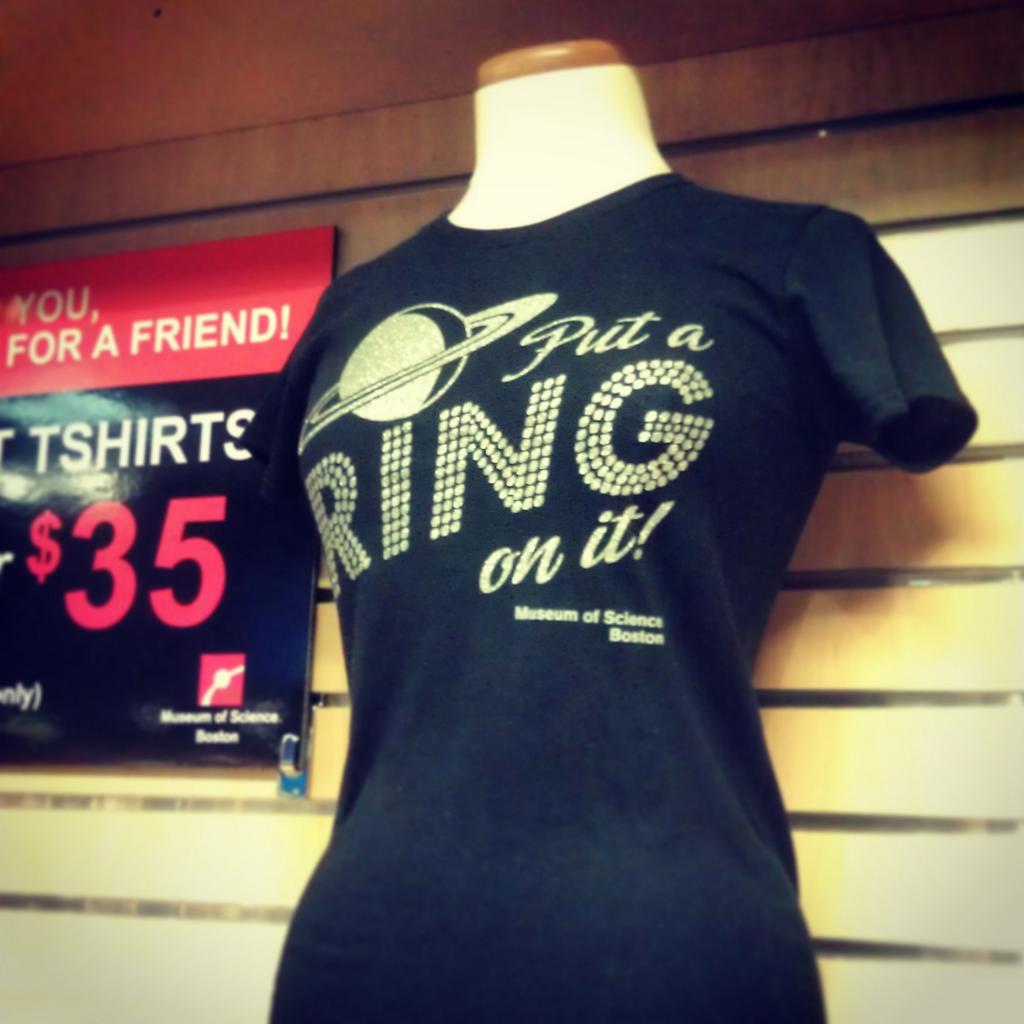
In a recent blog post on Let Clothes Be Clothes, the author asks London's Natural History Museum to imagine that the tops in their gift shop, "...aren’t t-shirts, but mini exhibits, and this exhibition is advertised to and for boys only – would that be acceptable? The Sciences are not a girl-free zone, and should never be promoted to children as such." Likewise, a post on Nerd in the Brain just articulated everything wrong with the unfortunate girls-only science books on sale at their local science museum. Namely that the books are "for girls" because they focus on the biology of flowers or the chemistry of baking muffins. Because boys don't want to bake muffins? Tell that to all the boys you didn't kick out of the play kitchen exhibit upstairs because they were busy pretending to bake. What message does it send to our visitors when they spend their whole museum visit exploring their interests freely, only to be packed back into little pink and blue boxes when they arrive in the gift shop?

This is about consistency of messaging so if it helps, think of it as branding. And it may be easier to improve than you think. Here are some suggestions for making the gift shop more gender inclusive, regardless of whether or not it's run by an external vendor:
  • Refuse to carry gender-labeled items. This means no "Girls Only" science books and equal-opportunity dinosaurs.
  • Do away with "girl" and "boy" sections. Group by age or interest instead.
  • Run training sessions for staff so they can help customers in ways that don't make assumptions. For example, give them the language to respond to a customer who is shopping "for a girl" by asking questions about the girl's interests rather than automatically pointing the customer at anything pink.
  • Make visible the efforts you are putting into promoting gender equity throughout the museum. Consider signage that points out specific design or content decisions you made and why you made them. If visitors have access to that knowledge, they might become more conscious of their own biases and assumptions about their children and themselves.
Our values are only as strong as our demonstrations of those values. The museum's mission shouldn't stop at the gift shop door.

Tuesday, September 30, 2014

Preparing art museums for children


Why is there is so much advice out there for adults about how to take children to museums? Articles are cropping up all over the place with titles like, Preparing Children for Art MuseumsWhen Can I Take My Kid to a Museum? and (my personal favorite) Taking Your Kid to the Museum Doesn’t Have to be MiserableThis trend is drawing attention to a very real issue that has nothing to do with whether adults are “equipped” to take their children to museums or if children are “ready” to be museum visitors. It's about museums creating learning experiences that work well for families.

For the most part, the suggestions in these guides are spot-on: start with your child’s interests, narrow your focus, take lots of breaks. But then some of the suggestions are a little baffling. Dr. Kimberlee L. Kiehl, director of the Smithsonian Early Enrichment Center (SEEC) makes a very thoughtful case for bringing children to museums, but at one point she recommends that since you can’t handle things in traditional collecting museums, you should bring toys to touch. Of course her recommendation is a practical one, but I hope the museums to which she refers (one has to wonder if she is implicating the Smithsonians here) are taking notes.

In another interview, Tricia Blasko, Curator of Education of the Racine Art Museum also has some excellent recommendations but then goes on to suggest that parents make their own scavenger hunt. Really? Scavenger hunts are the art museum version of the paper diner placemat that comes with crayons. It’s the most basic thing art museums have devised in the history of “quick! we forgot to make something for the kiddos”. Maybe they’re ubiquitous because they work, but if that's the case it seems simple enough to get the intern to make one up and leave some photocopies at the front desk, right?

People clearly want to bring their children to museums. We know museum visits do wonders for child development. The internet is abuzz with tips and tricks to hack your museum visit to make it more child-friendly. So here’s a crazy idea: why don’t we take the advice ourselves and make our museums easier for families to visit? I've compiled three examples of advice for visitors along with a few suggestions for how we can implement that advice so they don't have to. And here's a freebie: don't make families bring their own scavenger hunt- offer them one when they come in the door.

1. Look and Talk Together

"...encourage the children to hone their powers of observation by playing a game like I spy." Sharon Harding, How To Enjoy Art With Your Children
Most people don't feel comfortable having conversations about art, especially with children. But social interaction is so important in a museum. People learn and create memories by talking about what they're seeing. Additionally, visitors who are having engaging conversations are more likely to linger in the galleries.

To encourage dialogue between caregivers and children in the gallery, use brief, easy-to-read labels to give adults quick shots of background information and scripts to inspire their conversation. It's an incredibly effective technique in children's museums. Adults will read the questions right off the walls and it's an automatic conversation starter. Use temporary labels and observe visitors reading them in the galleries to see what questions are the juiciest.

An example of script-style interpretation in the exhibit, American Family at Children's Discovery Museum of San Jose

2. Review the Rules 

"Explaining to children in advance behavioral expectations (such as no touching) allows children to be prepared before their visit." Tricia Blasko, Preparing Children for Art Museums
Museum behavior rules are specific to museums. To set kids up to succeed (read: not get reprimanded in the galleries) we have to introduce them to our expectations and explain why we have these rules in place. Once children know what's expected of them, they'll feel comfortable, confident, and welcome in museums. That is, as long as our expectations are realistic. This is a great excuse to review the rules and toss out the ones that aren't there to protect the art and the visitors. It's worth reexamining policies that ban photos, cell phones, and talking.

A simple list of rules on the gallery map or website isn't enough- again, you're just putting the burden on the adult caregivers. Instead, use a direct approach that puts an emphasis on children having a positive visit. This could be a welcome speech from a visitor services representative, a complimentary intro tour for new visitors, an introductory gallery exhibit, or a video like this one from the Milwaukee Art Museum:


3. Limit Time 

“Don't plan on spending a full day in a museum or the entire family is likely to end up exhausted and grumpy.” Lisa Goodmurphy, 9 Tips for Taking Kids to an Art Museum
This is one of the best pieces of advice and it's the hardest to implement in real life. If a visitor spends $25 for each adult admission ticket, it's hard to justify leaving after only a few hours- which is probably all the kids can handle realistically. What if families could pay for a half day visit? Parking garages have reliable systems in place for charging people incrementally. Of course one pre-existing solution is membership, but that only works for local visitors and even if they want to be members, it's a big commitment to put the money down all at once. The St. Louis Art Museum and Yerba Buena Center for the Arts in San Francisco both offer gym-style memberships with recurring monthly payments.

Those are long term solutions. In the meantime, look around the museum and take note of all the opportunities visitors have to take a break and recharge. Cafeterias, picnic spots, gardens, and cozy nooks are essential museum amenities. Are there ways to make those spaces even more effective?

Child-sized museum fatigue. Photo by Babak Fakhamzadeh. 

In conclusion, we have work to do. But the good news is, visitors care about taking their children to museums. So much so that they want to help other visitors have positive museum experiences with their families. And museum educators are brimming with thoughtful solutions. People love museums and want to share that passion with their families. Just imagine how much more they’d love museums if we designed our exhibits with their families in mind.


Monday, July 7, 2014

Guest post on The Incluseum blog

I'm honored that The Incluseum, one of my favorite blogs, has published a post of mine about the role of inclusive language in making museums more welcoming to families of all kinds.

Here's a handy dandy chart I made to accompany my post:


Read the full article at The Incluseum and use the comments section to let us know how your museum is trying to be inclusive of all kinds of families.

Thursday, November 29, 2012

Who's in a family? 3 ways museums can welcome all families


If your museum doesn’t consider “families” its core audience group, it probably should. Now more than ever, most people coming to museums are visiting in family groups. Through research initiatives like the Family Learning Forum, we’ve come to know the benefits of inviting families into museums- for us and our communities. And if you didn't notice, the Family Learning Forum is a project of the USS Constitution Museum, a history museum. Catering to families is no longer solely the realm of children's museums. In an effort to serve families better, science centers are incorporating early childhood spaces and art museums are developing backpacks full of materials to engage children in their galleries.

Families are the units of our visitorship. When we offer family rates, family passes, and family memberships it’s important for us to think about what we mean by the word “family” and the assumptions we might make about what a family looks like, how many family members there are, and who’s who based on gender, race, and age.

Here are three ways to help make our museums more welcoming places for all families:


1. Define (or better yet, explicitly refrain from defining) your institution’s understanding of the word “family” in broad terms, somewhere prominent, like on your website or at the admissions desk. 

This is the easiest step to take in welcoming all families to your museum. Craft some language to let folks know that their family is welcome and won’t be scrutinized. Yerba Buena Center for the Arts in San Francisco does this simply and elegantly on their Family Pass.
"You define family - not us!"

2. Use the word “grown-up” “caregiver” or “adult” instead of “parent” “mom/dad” “grandparent” etc.

This suggestion can be used in signage as well as in conversations between visitors and floor staff. You don’t know who is accompanying a child to the museum, so avoid alienating your visitor or embarrassing yourself by keeping your language neutral and not making assumptions about relationships between family members. 

Examples of non-neutral language: 
  •  Family membership is limited to members of a single household.
  • Are you lost? Let’s go find your Mom.
  • Your granddaughter is so smart!
  • Is Dad at home today?
Examples of family-inclusive language:
  • All children must be accompanied by an adult caregiver. 
  • Uh-oh! Where's your grownup? 
  • Is this little-one with you? 
  • You all look like you’re having fun today! 

Family-inclusive signage at Boston Children's Museum

3. Make your policies fit your philosophy, not the other way around. 

If you've decided to tell your visitors that you support and validate their personal definition of "family", you might be worried that you'll start losing money on family passes and family memberships. Don't let that deter you from continuing to offer them, just change the way you think about them. Try offering memberships at rates based on the number of adults and children they want to put on the membership card. Before changing your family pass policy, try the Yerba Buena model- you might be surprised at how few people try and take advantage. And if it doesn't work, you can always institute a cap number later.

"And how many people would you like to put on your family membership?"

How does your museum welcome all families?

Saturday, May 8, 2010

how we use museums: the RISD museum of art vs. RISD's nature lab

Update: this post has been re-worked and re-published as a guest post on Nina Simon's blog, Museum 2.0

Should a museum be a destination or a place for everyday use? Why don't we use museums the way we use libraries? Nina Simon posed these provocative questions at her presentation and book signing I attended at JFK University last Thursday.

Putting aside the obvious answer to the question (because libraries are free and museums have entrance fees) I began to think more deeply about this museum-library binary. Do I use museums the same way I use libraries? Do I even want to use a museum like a library? I immediately recalled a phenomenon I witnessed as a student at the Rhode Island School of Design.

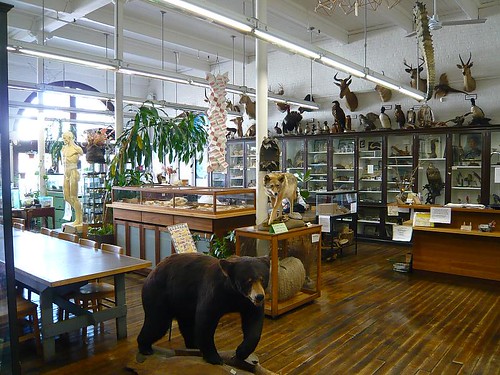
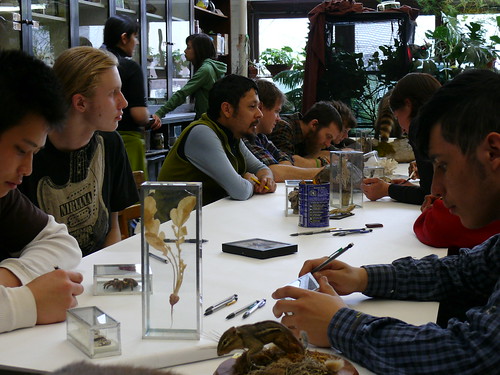
The Rhode Island School of Design was established in 1877 alongside its Museum of Art intended as a resource for students. The Museum hosts collections directly related to the majors offered at the school, including painting, sculpture, and decorative art and design. The Edna Lawrence Nature Lab, was established in 1937 also as a resource for students. Instead of works of art, the Nature Lab offers taxidermy specimens, bones, seed pods, and other natural items. Both buildings are located within whispering distance of one another at the heart of the city-scattered campus. Both are free for students. Both consider themselves museums with curators, a collection, and a similar mission. And yet, the Museum of Art is often overlooked or dismissed outright by students and the Nature Lab is cherished and spoken of fondly.

It was always obvious to me which was the preferred resource. I worked in the Museum of Art for my four years at RISD and when I'd talk about my tour-guide job there, other students would say, "Oh yeah, I never go there," or sometimes they'd say, "I should go there sometime," but I never heard the Museum referred to with the same glassy-eyed endearment that the Nature Lab enjoyed. Lack of appreciation for the Museum became even more apparent when it was announced that the Museum would be undergoing a massive renovation and addition. Students talked about the new plans with disgust, insulted that the money was going to the Museum instead of their studios. Regardless of the fact that the grant was specifically for the Museum and the school did not have the choice of funding studio space instead, clearly students didn't see the expansion as benefiting them.

The Museum tries to engage students with various programs and exhibitions, some more successful than others. The Sitings contest invites students to propose an installation and the two proposals that win each year are awarded grants and displayed in the Museum. Faculty shows tempt students into the Museum to see the work of their professors. The Siskind Center gives students the opportunity to pore over the Museum's massive collection of works on paper. Evening events entice with the promise of music and food. And Museum staff pat themselves on the back and think, "Mission accomplished. We've engaged the students." But a quick informal poll suggests otherwise.

The Museum is open the usual 10-5, Tuesday-Sunday, you can't bring in an ink pen without a permit, and the evening events attract mostly older community members instead of students. As much as I loved spending time in the Museum, drawing the sculptures, chatting with the docents, giving my friends informal tours, and enjoying bluegrass music in the painting gallery, I knew that not everyone felt so free in the museum environment. They preferred the cluttered, noisier, dirtier atmosphere of the Nature Lab. To them, the Nature Lab was much more accessible.

While the Nature Lab does admit the general public, the majority of users (as opposed to visitors) are RISD students and the place is nearly always packed. And effortlessly- no programs, no big exhibitions, just old animal skulls and sea shells. The Lab is open late, the staff is almost entirely students, and they sometimes play music on the stereo. You don't have to sign up to use wet media, you can touch many of the specimens, and you can even check some of them out. Some of the display cases contain mini-exhibitions curated by students.

I was one of very few students who worked in the Museum and we were relegated to the roles of tour guide and intern. I would have loved to be a part of a student curator club and make my own exhibitions with works from the Museum's 8,000 piece collection. And a student docent program would provide opportunities for work-study students to interpret the pieces for fellow students and fellow artists. I understand the security issues and archival issues of loosening up the atmosphere and handling the collection more, but what use are those objects if they aren't being used to inspire the students? And who better to care for them than artists who understand the materials and have a tremendous respect the works?

I'd love to see the Museum absorb the Nature Lab or maybe the other way around. A sort of art-museum-meets-natural-history-museum-with-library-component- maybe an Art-Nature-Museum-Lab. I could definitely see myself paying for a membership to enjoy a museum that also provided a unique space for me to come and create my own work. And anyone who has created artwork in public knows that people absolutely love to see artists at work. It reminds visitors that the art they are looking at was created by a human being and it can inspire them to look at natural objects in new ways and maybe feel less intimidated by the art-making process.

I don't think that all art museums need to be Art-Nature-Museum-Labs. There's definitely a place for white-walled museums with quiet, contemplative atmospheres and I'd hate to see places like that disappear. But the RISD Art Museum has missed its mark where its younger, quirkier cousin the Nature Lab has filled a need. The Museum could really benefit from a long hard look at itself and its mission and take a few cues from the time-honored, student-approved tradition around the corner.


Photo credits, top to bottom: RISD Museum of Art, Frank Mullin, Flickr user onerisd, Flickr user newurbanarts

ShareThis