Showing posts with label equity. Show all posts

Monday, June 1, 2015

The World's a Pink Explosion: Trans Family Exhibit Ready to Bloom

Thanks to the folks at the Incluseum for featuring this project on their blog

Rendering of the traveling version of the Trans Family Photo exhibit.

The Trans Family Photo Gallery, inspired by another project of mine, American Family, is a photography exhibit designed especially for children. The pictures in the gallery offer a window into the lives of transgender woman Erica Tobias and her children and grandchildren. 

My favorite part about working on this exhibit so far has been collaborating with accomplished photographer and RISD professor, Matthew Clowney. He's been such a joy to work with and I'm feeling very privileged to play a part in his creative process. Usually I come in at the later part of the exhibit development process- the artwork is made and it's my job to display it- but in this case, I've had the chance to work closely not only with Matthew but also with the family in the pictures. I feel like I've known Erica for years. From the interviews I conducted with family members, it's clear this is just who Erica is, a generous soul who welcomes everyone in with open arms, but I still feel special. We couldn't have picked a nicer family to work with.

Matthew making pictures of the Tobias family playing at the Boston Children's Museum.
This exhibit is also my first foray into the world of crowdfunding and it's been a huge learning experience for me. I can think of a million things I'd do differently for my next attempt, but right now I'm feeling so much gratitude for all the support, both moral and financial, we've received for our exhibit. I'm not a natural marketer so this campaign business is all new. It's always little scary going out of my comfort zone, but any time I'm scared I know I must be on to something.


The song playing in the background of the video is Pink Explosion, an original song written and performed by Matthew's partner, the talented Tracie Potochnik. Tracie had seen all the pictures Matthew had made of Erica and her family and listened to interviews I'd recorded with them. Inspired by Erica's love of the color pink and the springtime flowers in bloom, Tracie's refrain captures Erica's story beautifully: "The world's a pink explosion and I guess I'm bloomin' too." My favorite lines in song are in the last verse:

My heart it feels so happy and I guess it's just because
I'm finally who I'm meant to be and who I always was.

Here I am enjoying some downtime with Erica at her home with her daughters and granddaughter.
I'm excited about making this exhibit because I think all children (and adults for that matter) need what Laverne Cox calls "Possibility Models". We need to see people of color, women, and queer people represented in museums so children of all colors, all genders, and all sexualities can see the possibilities for themselves, not just as hypotheticals but as real, breathing options. 

Children gain an understanding of gender very early on in life. Many trans* and genderqueer individuals will report knowing they were different from their cisgender peers when they were toddlers. It's inevitable that some of the children who come to see this exhibit will recognize themselves. And for those who don't recognize themselves, I hope they'll see the importance of being a supportive family member and ally.
Sunday, February 15, 2015

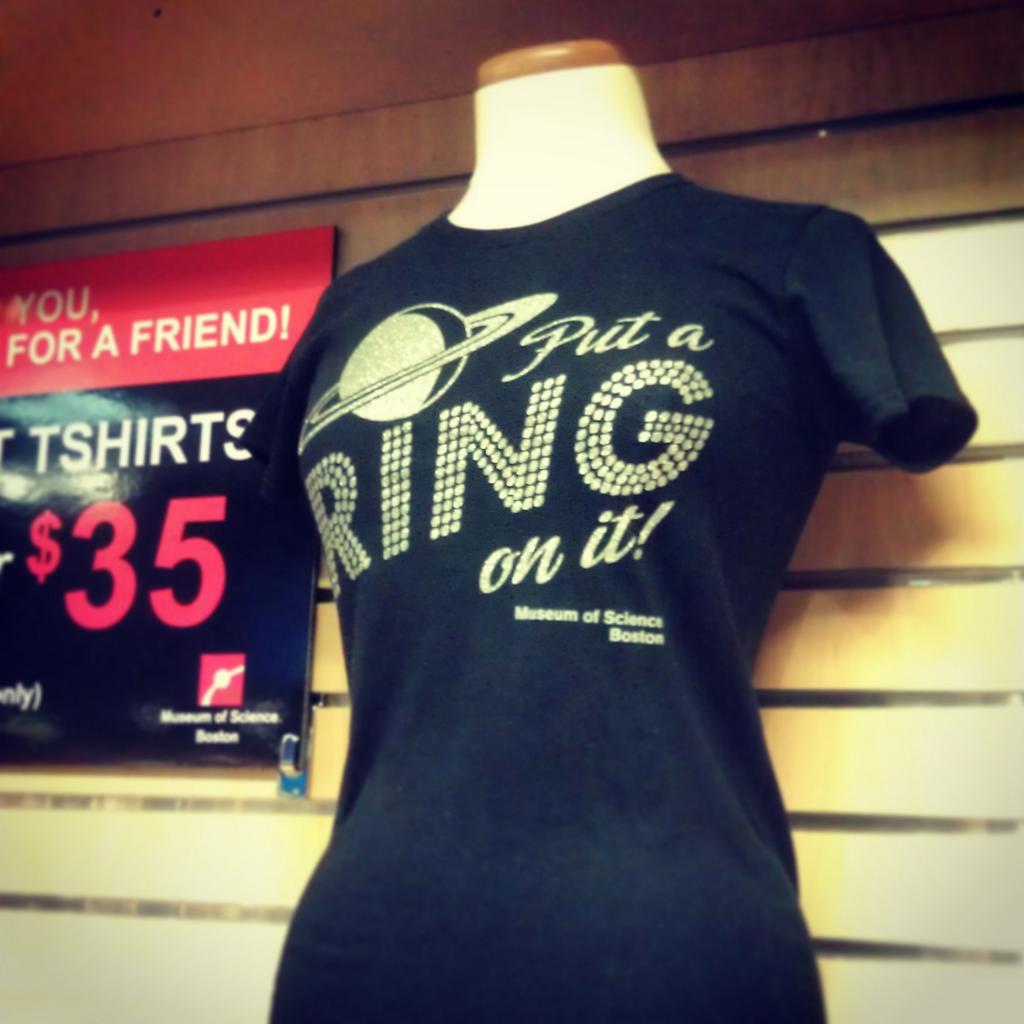
It's time for sexism to exit through the gift shop

Striving to be gender inclusive- except in the gift shop.

When I was in college I had a job as a cashier in the gift shop at a children's museum. While I loved working at the museum, I didn't like working in the gift shop. It seemed to be the place in the museum that brought out the worst in people, children and grownups alike. A family who would spend the afternoon strolling through the exhibits, laughing and enjoying each others' company would end their visit in the gift shop, playing out the roles of whiny, wheedling children and bribing, manipulative adults.

But even more disturbing than the tantrums, bargaining, and empty threats, was the way families who had happily played dress-up with their boys and built block towers with their girls would pass over the gift shop threshold and suddenly become staunch gender-enforcers.

I vividly remember witnessing one such instance:

A mother and son were perusing the gift shop's one-dollar bins. Among the piles of cheap plastic toys the little boy, maybe four years old, settled on a pencil. A pencil. It was the color of bubble gum and had a matching pink downy feather sprouting out of where the eraser should have been. He smiled and held it up for his mother to see, absentmindedly stroking his cheek with the soft feather. She frowned at him and shook her head.

"No!" she said emphatically. "Pick something else."

Then she said something that made my stomach turn: "What would your father say?"

Now, it wasn't the museum's fault that this interaction happened in their gift shop. The pencil didn't say "girl" on it and it wasn't in a bin marked "girls". But it made me realize that the values that we were promoting in the rest of the museum (like gender equity) seemed to stop at the gift shop.

It is well-documented that when girls are reminded of their gender they tend to perform worse on academic tests. This phenomenon is known as stereotype threat and it happens when women internalize expectations that they won't be good at certain subjects like math or science. Many museums take this to heart and are careful to include representation of girls in their STEM exhibits by featuring girl characters, female pronouns, and profiles of important women in STEM professions. Likewise, many museums also won't discourage boys from trying on dresses, playing house, and caring for dolls in their exhibits.

The offerings in the exhibits reflect the museum's values, which educators and exhibit developers take very seriously. However, when it comes to gift shop offerings, a lot of museums will defer culpability. Our gift shop is run by an external vendor, they say with a shrug. We don't pick what gets sold or how it's displayed. Maybe true, but do you really have no say? What about that time you demanded that the cafe (also run by an external vendor) take peanuts off the menu? And don't try explaining that there's precedent for non-mission-aligned offerings because your cafe sells corn dogs next to the healthy eating exhibit. That's not an excuse, that's just hypocrisy. Get on that!

In a recent blog post on Let Clothes Be Clothes, the author asks London's Natural History Museum to imagine that the tops in their gift shop, "...aren’t t-shirts, but mini exhibits, and this exhibition is advertised to and for boys only – would that be acceptable? The Sciences are not a girl-free zone, and should never be promoted to children as such." Likewise, a post on Nerd in the Brain just articulated everything wrong with the unfortunate girls-only science books on sale at their local science museum. Namely that the books are "for girls" because they focus on the biology of flowers or the chemistry of baking muffins. Because boys don't want to bake muffins? Tell that to all the boys you didn't kick out of the play kitchen exhibit upstairs because they were busy pretending to bake. What message does it send to our visitors when they spend their whole museum visit exploring their interests freely, only to be packed back into little pink and blue boxes when they arrive in the gift shop?

This is about consistency of messaging so if it helps, think of it as branding. And it may be easier to improve than you think. Here are some suggestions for making the gift shop more gender inclusive, regardless of whether or not it's run by an external vendor:
  • Refuse to carry gender-labeled items. This means no "Girls Only" science books and equal-opportunity dinosaurs.
  • Do away with "girl" and "boy" sections. Group by age or interest instead.
  • Run training sessions for staff so they can help customers in ways that don't make assumptions. For example, give them the language to respond to a customer who is shopping "for a girl" by asking questions about the girl's interests rather than automatically pointing the customer at anything pink.
  • Make visible the efforts you are putting into promoting gender equity throughout the museum. Consider signage that points out specific design or content decisions you made and why you made them. If visitors have access to that knowledge, they might become more conscious of their own biases and assumptions about their children and themselves.
Our values are only as strong as our demonstrations of those values. The museum's mission shouldn't stop at the gift shop door.

Sunday, December 22, 2013

Take it from children's museums- these toys are for everyone


Around this time of year the discussion about girl toys vs. boy toys gets particularly lively. Most of us who are concerned about the strict gendering of toys are in agreement: the way toys are designed and marketed is sexist and harmful to children. But all too often these discussions take a turn away from discussing the limitations this puts on children and starts maligning toys meant for girls and upholding boy toys as somehow better.

I’d like to argue for a more inclusive way of talking about toys. Instead of using the word “girly” as a synonym for “dopey” or “frivolous” or referring to “playing with dolls” in a dismissive way, let’s recognize the value of “girl” and “boy” toys. To say that playing with dolls is not as important as playing with blocks, we are creating a hierarchy of play and sending children the message that some interests are better than others.

And it has implications on the professions that grow out of these interests- it’s no secret that the salaries in the male-dominated engineering (building stuff) field are much higher than the salaries in the female-dominated teaching (communicating and taking care of people) field.

Here are three toys that are generally thought of as being for girls and why they are not to be dismissed. In fact these toys are so important that children’s museums include them in their exhibits, and though I’m completely biased, I happen to think that’s a great metric for evaluating a play experience.

1. Baby Dolls
A boy and girl with baby dolls at the Iowa Children's Museum 
Photo by Jody Landers.
These are some of the best dolls you can get. Unlike fashion dolls, they are realistic and often anatomically correct and their skin comes in a variety of colors. In their day-to-day lives, children are completely dependent on grownups and it can be extremely rewarding to flip things and become someone who takes care of someone else for a change. And children know just what to do. They rock the baby in their arms, sing to it, feed it, and change its diapers. When children imagine the feelings and needs of others, they are building empathy skills and those will serve them well regardless of whether they want to become parents themselves one day.

2. Dollhouses 
Historic dollhouse on display at Boston Children's Museum.
Dollhouses make a child’s familiar world small and easy to manipulate. The scale gives children control over things they have no control over in real life and allows them to act out scenarios between characters. Storytelling and dialogue are ways that children learn valuable communication and interpersonal skills. When two or more children play together with a dollhouse, the negotiation skills they develop are valuable too.

3. Play Kitchens
The Rainbow Market at Children's Discovery Museum of 
San Jose features a play kitchen with child-sized appliances.
In a world where counters are hard to reach, a scaled-down anything is exciting and kitchens are no exception. Real kitchens are not particularly child-friendly places to play, but they are a central part of daily life in a society that eats three times a day. When there is nothing to mash or stir, children often need to be shooed out of kitchens for their own safety. Play kitchens give children a safe opportunity to emulate grownups independently and begin to develop healthy personal relationships with food, eating, and cooking.


Resources:

Thursday, January 24, 2013

Women in museums: over-represented and underpaid

...our journey is not complete until our wives, our mothers, and daughters can earn a living equal to their efforts.
President Barack Obama

As soon as the 2012 AAM National Comparative Museum Salary Study came out, I was on their website downloading my free copy. It's the first publication of its kind for the museum field and I'm thrilled to have access to a resource like this. You can download it for free too if you're an AAM member.  The biggest downfall of the study, which is admitted outright in Chapter 1, is its omission of the Mid-Atlantic and the West Coast. Without their representation this study leaves out New York, Los Angeles, and Washington DC, three of the top five "Most [Economically] Important Cities" ranked by Business Insider. As disappointing as that is, I'm confident the next Salary Study AAM publishes will include all 50 states. My real disappointment (note: not surprise) came later when I started to read the data.

Two thirds of the survey respondents were women and they outnumbered men in all but 8 of the 48 positions highlighted in the survey. And yet, a quick scan down each page reveals that, "Although women usually fill the majority of jobs in each position, it is clear from these tables that they typically receive less pay than their male peers." (26) Even though 60% of CFOs in museums are women and even though 57% of executive directors are women, men are making higher salaries. Not only are women not compensated equally, it's often women who are involved in making those decisions.

There are a lot of reasons why women make less than men. Not one of them is a good excuse. Change won't happen overnight, but there are a few things we can start doing right away. I recommend reading, Women Don't Ask by Linda Babcock and Sara Laschever. Regardless of how victim-blamey the title sounds, it's a useful book for anyone who avoids negotiation or could use some advice on self-advocacy.

Here's my call to arms, fellow Emerging Museum Professionals: let's take on those director-level positions, mentor the women in our lives in self-advocacy, then ensure that the women we hire receive the same salaries as men in the same positions. While we're at it we need to hire people of color (according to AAM's "data snapshot", the museum workforce is 79.4% white) and recognize the artistic and scientific achievement of women and people of color in our museums, but that's another blog post (or rather a whole lot of other blog posts).

It's unacceptable for any field, let alone a female-dominated one, to pay women less than men and it is completely within our power as museum professionals to change this. In fact, we're the only ones who can.


ShareThis