Monday, June 1, 2015

The World's a Pink Explosion: Trans Family Exhibit Ready to Bloom

Thanks to the folks at the Incluseum for featuring this project on their blog

Rendering of the traveling version of the Trans Family Photo exhibit.

The Trans Family Photo Gallery, inspired by another project of mine, American Family, is a photography exhibit designed especially for children. The pictures in the gallery offer a window into the lives of transgender woman Erica Tobias and her children and grandchildren. 

My favorite part about working on this exhibit so far has been collaborating with accomplished photographer and RISD professor, Matthew Clowney. He's been such a joy to work with and I'm feeling very privileged to play a part in his creative process. Usually I come in at the later part of the exhibit development process- the artwork is made and it's my job to display it- but in this case, I've had the chance to work closely not only with Matthew but also with the family in the pictures. I feel like I've known Erica for years. From the interviews I conducted with family members, it's clear this is just who Erica is, a generous soul who welcomes everyone in with open arms, but I still feel special. We couldn't have picked a nicer family to work with.

Matthew making pictures of the Tobias family playing at the Boston Children's Museum.
This exhibit is also my first foray into the world of crowdfunding and it's been a huge learning experience for me. I can think of a million things I'd do differently for my next attempt, but right now I'm feeling so much gratitude for all the support, both moral and financial, we've received for our exhibit. I'm not a natural marketer so this campaign business is all new. It's always little scary going out of my comfort zone, but any time I'm scared I know I must be on to something.


The song playing in the background of the video is Pink Explosion, an original song written and performed by Matthew's partner, the talented Tracie Potochnik. Tracie had seen all the pictures Matthew had made of Erica and her family and listened to interviews I'd recorded with them. Inspired by Erica's love of the color pink and the springtime flowers in bloom, Tracie's refrain captures Erica's story beautifully: "The world's a pink explosion and I guess I'm bloomin' too." My favorite lines in song are in the last verse:

My heart it feels so happy and I guess it's just because
I'm finally who I'm meant to be and who I always was.

Here I am enjoying some downtime with Erica at her home with her daughters and granddaughter.
I'm excited about making this exhibit because I think all children (and adults for that matter) need what Laverne Cox calls "Possibility Models". We need to see people of color, women, and queer people represented in museums so children of all colors, all genders, and all sexualities can see the possibilities for themselves, not just as hypotheticals but as real, breathing options. 

Children gain an understanding of gender very early on in life. Many trans* and genderqueer individuals will report knowing they were different from their cisgender peers when they were toddlers. It's inevitable that some of the children who come to see this exhibit will recognize themselves. And for those who don't recognize themselves, I hope they'll see the importance of being a supportive family member and ally.

Sunday, February 15, 2015

It's time for sexism to exit through the gift shop

Striving to be gender inclusive- except in the gift shop.

When I was in college I had a job as a cashier in the gift shop at a children's museum. While I loved working at the museum, I didn't like working in the gift shop. It seemed to be the place in the museum that brought out the worst in people, children and grownups alike. A family who would spend the afternoon strolling through the exhibits, laughing and enjoying each others' company would end their visit in the gift shop, playing out the roles of whiny, wheedling children and bribing, manipulative adults.

But even more disturbing than the tantrums, bargaining, and empty threats, was the way families who had happily played dress-up with their boys and built block towers with their girls would pass over the gift shop threshold and suddenly become staunch gender-enforcers.

I vividly remember witnessing one such instance:

A mother and son were perusing the gift shop's one-dollar bins. Among the piles of cheap plastic toys the little boy, maybe four years old, settled on a pencil. A pencil. It was the color of bubble gum and had a matching pink downy feather sprouting out of where the eraser should have been. He smiled and held it up for his mother to see, absentmindedly stroking his cheek with the soft feather. She frowned at him and shook her head.

"No!" she said emphatically. "Pick something else."

Then she said something that made my stomach turn: "What would your father say?"

Now, it wasn't the museum's fault that this interaction happened in their gift shop. The pencil didn't say "girl" on it and it wasn't in a bin marked "girls". But it made me realize that the values that we were promoting in the rest of the museum (like gender equity) seemed to stop at the gift shop.

It is well-documented that when girls are reminded of their gender they tend to perform worse on academic tests. This phenomenon is known as stereotype threat and it happens when women internalize expectations that they won't be good at certain subjects like math or science. Many museums take this to heart and are careful to include representation of girls in their STEM exhibits by featuring girl characters, female pronouns, and profiles of important women in STEM professions. Likewise, many museums also won't discourage boys from trying on dresses, playing house, and caring for dolls in their exhibits.

The offerings in the exhibits reflect the museum's values, which educators and exhibit developers take very seriously. However, when it comes to gift shop offerings, a lot of museums will defer culpability. Our gift shop is run by an external vendor, they say with a shrug. We don't pick what gets sold or how it's displayed. Maybe true, but do you really have no say? What about that time you demanded that the cafe (also run by an external vendor) take peanuts off the menu? And don't try explaining that there's precedent for non-mission-aligned offerings because your cafe sells corn dogs next to the healthy eating exhibit. That's not an excuse, that's just hypocrisy. Get on that!

In a recent blog post on Let Clothes Be Clothes, the author asks London's Natural History Museum to imagine that the tops in their gift shop, "...aren’t t-shirts, but mini exhibits, and this exhibition is advertised to and for boys only – would that be acceptable? The Sciences are not a girl-free zone, and should never be promoted to children as such." Likewise, a post on Nerd in the Brain just articulated everything wrong with the unfortunate girls-only science books on sale at their local science museum. Namely that the books are "for girls" because they focus on the biology of flowers or the chemistry of baking muffins. Because boys don't want to bake muffins? Tell that to all the boys you didn't kick out of the play kitchen exhibit upstairs because they were busy pretending to bake. What message does it send to our visitors when they spend their whole museum visit exploring their interests freely, only to be packed back into little pink and blue boxes when they arrive in the gift shop?

This is about consistency of messaging so if it helps, think of it as branding. And it may be easier to improve than you think. Here are some suggestions for making the gift shop more gender inclusive, regardless of whether or not it's run by an external vendor:
  • Refuse to carry gender-labeled items. This means no "Girls Only" science books and equal-opportunity dinosaurs.
  • Do away with "girl" and "boy" sections. Group by age or interest instead.
  • Run training sessions for staff so they can help customers in ways that don't make assumptions. For example, give them the language to respond to a customer who is shopping "for a girl" by asking questions about the girl's interests rather than automatically pointing the customer at anything pink.
  • Make visible the efforts you are putting into promoting gender equity throughout the museum. Consider signage that points out specific design or content decisions you made and why you made them. If visitors have access to that knowledge, they might become more conscious of their own biases and assumptions about their children and themselves.
Our values are only as strong as our demonstrations of those values. The museum's mission shouldn't stop at the gift shop door.

Wednesday, December 31, 2014

The to-do list gets an upgrade


This year I have been trying out a planning tool that I really like. I'm not the first person to come up with this, but several people have liked the idea so I am passing it on to you. It's a to-do list that actually works.*

Basically it's a set of lists. I use Google Docs so I can access my document anywhere and update it easily- that's key. I populate the first list with my goals (professional, personal, short term, long term) and another with my accomplishments. Goals include gaining Twitter followers, writing blog posts, clearing out my studio, and getting an oil change (because for some reason I need the extra motivation for that one). Accomplishments include things like being a guest blogger and having conference proposals accepted but also meeting personal financial goals and writing thank you notes.

I keep adding new goals, making sure to vary short term and long term goals so I don't overwhelm myself. I find I don't mind looking at a big long to-do list if I'm also looking at list of things I did and I'm proud of. And I really like moving stuff from the Goals list to the Accomplishments list.

If you want to take it a step further, this document can serve as a personal archive too. For example, I just used my Accomplishments list to make a year-end summary I'm calling The State of the Margaret. It's a list of things I've done, as well as a few stats (money in the bank, loans paid off, Twitter followers gained, number of conference speaking engagements, etc.). Next year I'll compare my year-end summaries and see how far I've come.

I recommend this to anyone who wants a little personal encouragement for the things you are doing for yourself and your career. It's like a push and a pat on the back at the same time.


*For me. You might like it too.


Saturday, November 8, 2014

Guest post on Boston Children's Museum's 'Power of Play' blog

You’ve likely seen it for yourself that there’s something very compelling for children about re-envisioning everyday objects, assembling ensembles, or pretending to be somebody else. But did you know it’s also good for their brains? According to the National Association for the Education of Young Children (NAEYC), playing with costumes can build imagination, help children discover new things about themselves, and can be a powerful tool for self-expression. But I wasn’t about to take NAEYC’s word for it, so I took my questions to an expert: 8-year-old costume-enthusiast Nate Hill.

Nate in one of his favorite costumes.

My first contribution to the Boston Children's Museum blog is all about costumes. Inspired by Halloween, I sat down with two of my esteemed colleagues with experience not only teaching with costumes, but wearing them too: Arts Program Manager and performance artist Alice Vogler and Culture and Performing Arts Educator and ballet dancer Steve Schroth. I also interviewed 8-year-old Nate Hill, son of Marla QuiƱones, Director of Exhibit Design and Production. I was so taken with Nate's thoughtful, well-articulated responses that he quickly became the star of the article.

Read the rest of the article on the Power of Play blog here.


Monday, October 27, 2014

Guest post on the Western Museum Association blog

Nick Cave's "Freeport" at Peabody Essex Museum exemplifies an art exhibit with multigenerational appeal. Photo courtesy of Lauren Pazzaneze of Junkyard Arts.


 I love writing guest posts for other blogs so naturally I was thrilled when the Western Museum Association asked me to contribute. I saw it as the perfect opportunity to sit down with some of my colleagues at Boston Children's Museum and pick their brains.

I interviewed Director of Exhibitions Kate Marciniec and Arts Program Manager Alice Vogler and they shared with me their expertise and advice about how the museum field can look to children's museums to learn how to create exhibitions that successfully engage children and their families. The piece is called Bring the Family: Children's Museum Wisdom for the Rest of the Museum Community.

Here's how it starts:

So your museum wants to welcome families with children. You already know that welcoming families better serves the community and it also increases visitorship as the youngest visitors today are the members and donors of tomorrow.

But where to begin? A great way to start is by consulting the experts. And when it comes to designing multigenerational social learning experiences, children’s museums are certainly the experts. 
Note, I said, “multigenerational social learning experiences” and not “exhibits for children.” Because that’s the best-kept secret of the children’s museum—we actually design for grownups too. Kids don’t visit museums on their own—their adult caregivers are the ones deciding whether to stay and explore, or even to visit at all. Keeping adults entertained and engaged is key to creating great experiences for our young visitors.

Head on over to the Western Museum Association blog for the rest of the article.

Tuesday, September 30, 2014

Preparing art museums for children


Why is there is so much advice out there for adults about how to take children to museums? Articles are cropping up all over the place with titles like, Preparing Children for Art MuseumsWhen Can I Take My Kid to a Museum? and (my personal favorite) Taking Your Kid to the Museum Doesn’t Have to be MiserableThis trend is drawing attention to a very real issue that has nothing to do with whether adults are “equipped” to take their children to museums or if children are “ready” to be museum visitors. It's about museums creating learning experiences that work well for families.

For the most part, the suggestions in these guides are spot-on: start with your child’s interests, narrow your focus, take lots of breaks. But then some of the suggestions are a little baffling. Dr. Kimberlee L. Kiehl, director of the Smithsonian Early Enrichment Center (SEEC) makes a very thoughtful case for bringing children to museums, but at one point she recommends that since you can’t handle things in traditional collecting museums, you should bring toys to touch. Of course her recommendation is a practical one, but I hope the museums to which she refers (one has to wonder if she is implicating the Smithsonians here) are taking notes.

In another interview, Tricia Blasko, Curator of Education of the Racine Art Museum also has some excellent recommendations but then goes on to suggest that parents make their own scavenger hunt. Really? Scavenger hunts are the art museum version of the paper diner placemat that comes with crayons. It’s the most basic thing art museums have devised in the history of “quick! we forgot to make something for the kiddos”. Maybe they’re ubiquitous because they work, but if that's the case it seems simple enough to get the intern to make one up and leave some photocopies at the front desk, right?

People clearly want to bring their children to museums. We know museum visits do wonders for child development. The internet is abuzz with tips and tricks to hack your museum visit to make it more child-friendly. So here’s a crazy idea: why don’t we take the advice ourselves and make our museums easier for families to visit? I've compiled three examples of advice for visitors along with a few suggestions for how we can implement that advice so they don't have to. And here's a freebie: don't make families bring their own scavenger hunt- offer them one when they come in the door.

1. Look and Talk Together

"...encourage the children to hone their powers of observation by playing a game like I spy." Sharon Harding, How To Enjoy Art With Your Children
Most people don't feel comfortable having conversations about art, especially with children. But social interaction is so important in a museum. People learn and create memories by talking about what they're seeing. Additionally, visitors who are having engaging conversations are more likely to linger in the galleries.

To encourage dialogue between caregivers and children in the gallery, use brief, easy-to-read labels to give adults quick shots of background information and scripts to inspire their conversation. It's an incredibly effective technique in children's museums. Adults will read the questions right off the walls and it's an automatic conversation starter. Use temporary labels and observe visitors reading them in the galleries to see what questions are the juiciest.

An example of script-style interpretation in the exhibit, American Family at Children's Discovery Museum of San Jose

2. Review the Rules 

"Explaining to children in advance behavioral expectations (such as no touching) allows children to be prepared before their visit." Tricia Blasko, Preparing Children for Art Museums
Museum behavior rules are specific to museums. To set kids up to succeed (read: not get reprimanded in the galleries) we have to introduce them to our expectations and explain why we have these rules in place. Once children know what's expected of them, they'll feel comfortable, confident, and welcome in museums. That is, as long as our expectations are realistic. This is a great excuse to review the rules and toss out the ones that aren't there to protect the art and the visitors. It's worth reexamining policies that ban photos, cell phones, and talking.

A simple list of rules on the gallery map or website isn't enough- again, you're just putting the burden on the adult caregivers. Instead, use a direct approach that puts an emphasis on children having a positive visit. This could be a welcome speech from a visitor services representative, a complimentary intro tour for new visitors, an introductory gallery exhibit, or a video like this one from the Milwaukee Art Museum:


3. Limit Time 

“Don't plan on spending a full day in a museum or the entire family is likely to end up exhausted and grumpy.” Lisa Goodmurphy, 9 Tips for Taking Kids to an Art Museum
This is one of the best pieces of advice and it's the hardest to implement in real life. If a visitor spends $25 for each adult admission ticket, it's hard to justify leaving after only a few hours- which is probably all the kids can handle realistically. What if families could pay for a half day visit? Parking garages have reliable systems in place for charging people incrementally. Of course one pre-existing solution is membership, but that only works for local visitors and even if they want to be members, it's a big commitment to put the money down all at once. The St. Louis Art Museum and Yerba Buena Center for the Arts in San Francisco both offer gym-style memberships with recurring monthly payments.

Those are long term solutions. In the meantime, look around the museum and take note of all the opportunities visitors have to take a break and recharge. Cafeterias, picnic spots, gardens, and cozy nooks are essential museum amenities. Are there ways to make those spaces even more effective?

Child-sized museum fatigue. Photo by Babak Fakhamzadeh. 

In conclusion, we have work to do. But the good news is, visitors care about taking their children to museums. So much so that they want to help other visitors have positive museum experiences with their families. And museum educators are brimming with thoughtful solutions. People love museums and want to share that passion with their families. Just imagine how much more they’d love museums if we designed our exhibits with their families in mind.


Saturday, July 19, 2014

Q&A on NPR's education blog

I'm thrilled to announce that my Q&A with NPR's Juana Summers just went live. You can read it on NPR's education blog here.

Screen captures from the NPR blog. Weird quote, but hey whatever, I'm just going to go with it.


Here's an excerpt from the Q&A:
We usually associate kinesthetic learning, learning by doing, with children and therefore as a lesser learning style than say, sitting in a lecture hall. Not only is that offensive to children, it's also just not true. We seem to have this bias that learning can't look like fun, and that's a pretty dreary way of looking at the world. Grown-ups and children alike learn in a whole range of ways and while sometimes learning looks like sitting down and being quiet — which can be very enjoyable — it's just one type of learning and it's certainly no better than other types of learning. In children's museums, we design experiences that engage the senses, stimulate the imagination, and encourage social interaction. Experiences that engage lots of different parts of the brain are particularly personal, memorable, and enjoyable and it looks like play — because it is.


Juana found my article on the Incluseum blog which led her to my post about kids in traditional museums. She interviewed me over the phone for this piece as part of a series that she's doing about play and learning. I'm so grateful to the Incluseum for the exposure that got me noticed by NPR.


Monday, July 7, 2014

Guest post on The Incluseum blog

I'm honored that The Incluseum, one of my favorite blogs, has published a post of mine about the role of inclusive language in making museums more welcoming to families of all kinds.

Here's a handy dandy chart I made to accompany my post:


Read the full article at The Incluseum and use the comments section to let us know how your museum is trying to be inclusive of all kinds of families.

Friday, May 9, 2014

Defining family: starting the conversation at your museum

Families are vitally important to museums. By serving families museums can expand their audience, serve their community, encourage repeat visitation, and build the next generation of museum visitors. 

But who exactly is considered a family? And how are museums actively welcoming families of all kinds?

I recently asked these questions at a brown bag discussion with my colleagues at Boston Children's Museum. The conversation went so well that I want to share a step-by-step outline for how you could lead a similar discussion at your museum. And PS. I'm not a manager or director. Anyone at any level of the museum can organize an informal discussion like this.


Some background information

The following outline is based on a session I gave with Laura Callen and Rachel Kadner at the California Association of Museums conference. The presentation was called "Welcoming 21st Century Families in Museums" with the goals of debunking the myth of the nuclear family and turning a critical eye on museum policies, programs, and language. Laura is the founder and director of the Adoption Museum Project, an organization devoted to exploring the story of adoption.  Rachel is the Parenting and Community Partnerships Manager at Habitot Children’s Museum whose programs serve families of all kinds. Both Laura and Rachel have strong backgrounds in social justice.


Starting the conversation

You've booked the conference room, sent the all-staff email, and gathered up your Sharpies and giant Post-It pad. You're ready to talk families at the museum. Here's a cheat-sheet to help you along in your conversation:

1. What does family mean to you?

Everyone has their own definition of family. By asking this question you can begin to explore your preconceived notions about what family means and you may learn things about your colleagues you never knew before. After your discussion, offer up this definition that Laura, Rachel, and I came up with:

21st Century Family n.
  1.  A family as defined by the individuals involved, inclusive across race, culture, gender, age, and marital status. Family members may or may not be biologically related, share the same household, or be legally recognized.
  2. As opposed to "nuclear family". 

2. Share some facts


"4 out of 5 people living in the US ... do not live behind the picket fence— [their] lives fall outside outdated notions of family, with a mom at home and a dad at work."
How many of your co-workers are in this majority?


3. Talk about allyship

Museums have the privilege to serve and be allies for families of all kinds. What does it mean to be an ally?

  • taking responsibility for the changes we know are needed in our society 
  • being intentional, overt, and consistent
  • challenging prevailing patterns of oppression 
  • making privileges that are usually invisible, visible 
  • facilitating the empowerment of persons targeted by oppression 
  • talking to others in the dominant group about their behavior 


4. What are we doing to serve families of all kinds?

Chances are, your museum is already doing things to welcome and serve diverse families, intentionally or not. Use this opportunity to focus on all the good work you're already doing. Not only is it encouraging and validating to start here, it will also illuminate areas for improvement and pre-existing partnerships that could be strengthened.


5. How could we do even more?

Now is the time for brainstorming. After you've gotten a good list going, go back through the ideas you've come up with and identify possible community advocates or partners you could leverage and find interested individuals to investigate next steps. This turns your list of ideas into a list of action items and people who will be excited to help in the effort.


And that's it! Make sure you document your conversation for the participating members as well as the folks who couldn't make it. And keep the discussion going.

Thursday, April 10, 2014

Museums and children: built to fail?


Does the thought of children in a museum make your heart swell? or does it make your heart stop? If the museum isn’t set up for young visitors, you’re probably on the cardiac arrest side of the equation. And it’s understandable.

The fact of the matter is, kids use museums differently than grown-ups. They’re more active and they talk more. This is how they learn and relate to the world. If museums truly want real live ACTUAL children to visit then they need to accept that children have different needs than grownups and design for those needs. If they don’t, museums are upholding unfair expectations. Children seem disruptive in galleries because galleries are not designed for their learning style. In effect, museums have set them up for failure.

One of the most fundamental problems here is the narrow definition of an appropriate experience for children to have in a museum setting. Columnist Judith Dobrzynski is becoming well-known for expressing her biases against museum experiences that look too much like fun and her thoughts on this issue is no exception. A self-described proponent of children in museums, she notes that the children she sees in museums are often “just horsing around or talking” and holds in contrast examples from the Denver Art Museum where they are actively engaging children with backpacks and programs that relate directly to the artwork on exhibit. Young visitors learn history and make art inspired by what they see on the walls. Judith deems this experience an appropriate one because she sees a clear correlation between the programming and the collection.

But Dobrzynski's underlying assumption is that every interaction a child has in a museum must be a content-driven one. When she writes dismissively about what she sees as “just play” she’s dismissing the fact that children learn by playing. In this regard, traditional museums need to take a page from the children’s museum handbook. Children’s museums (and science museums) have mission statements about sparking interest and inspiring love of learning, not delivering facts or even explaining concepts. They value attitudes and relationships over transference of knowledge.

Designing for children (and other kinesthetic learners) in museums is often mistaken for dumbing-down the museum. This speaks more to our society’s hierarchy of learning styles than anything else, but that’s another blog post. It’s this misapprehension that stokes the fears of folks like Ian Hewett who writes that such a philosophy dictates that “high culture must be brought down to the kids’ level”. He believes that art is far too complex for a child to appreciate. Incited by the bad behavior of the notorious grownups at the Tate Museum who let their kids climb all over a Donald Judd sculpture, he suggests that the pendulum is swinging in such a child-centric direction that eventually all hell will break loose and ultimately concludes that we simply cannot accommodate children in museums at all and they should be banned from museums altogether.

Of course there are plenty of museum professionals who disagree with Hewett. Educator Sarah Erdman encourages parents to visit museums with their babies. Not only does a museum visit serve the interests of a parent who wants a break from the isolated world of Cheerios and laundry (so much laundry), it can also delight infants with some of their favorite things: bright colors, photos of human faces, and the voice of their parent as they excitedly narrate their experience.

I wish Ian had been with me at the Museum of Fine Arts in Boston last weekend (really, not really) to see an infant in his mother’s arms go gaga for their Quilts and Color exhibit. The baby may not have comprehended the history of the quilts or the color theory that his parents were interested in, but he was enjoying art with his family in a developmentally appropriate way. I felt bad that his mom felt like she had to shush his squeals of delight in the quiet gallery.

“We should be thrilled when even young children respond so enthusiastically ... Isn’t this exactly what we want?” 
Dea Birkett, Director of Kids in Museums, The Telegraph

Setting realistic expectations for children in museums comes down to what we in the children’s museum field call “ages and stages”. A three-year-old has very different needs and capabilities than a seven-year-old or a thirteen-year-old so exhibit developers match their expectations for children to their development and design experiences that meet their widely varying needs simultaneously. And children's museums always try to make sure the experience is just as engaging for grownups because let’s face it, the kids didn’t drive themselves to the museum. Creating multi-layered experiences is challenging, but it’s not impossible.


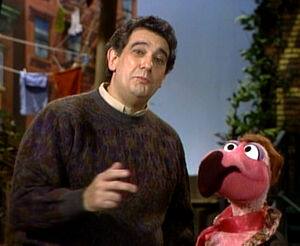
Sesame Street is a classic example of a successful multi-layered experience. Do the kids know who Placido Domingo is? Nope. Do they still get a kick out of Placido Flamingo? Absolutely.

As educator Cate Bayles succinctly states, “children breathe life into museums”. And deep down, most of us really do want children in our museums- even if it’s just to entice their parents. But making room for children in museums has its implications. What does it mean to truly invite children to the museum?

Sunday, December 22, 2013

Take it from children's museums- these toys are for everyone


Around this time of year the discussion about girl toys vs. boy toys gets particularly lively. Most of us who are concerned about the strict gendering of toys are in agreement: the way toys are designed and marketed is sexist and harmful to children. But all too often these discussions take a turn away from discussing the limitations this puts on children and starts maligning toys meant for girls and upholding boy toys as somehow better.

I’d like to argue for a more inclusive way of talking about toys. Instead of using the word “girly” as a synonym for “dopey” or “frivolous” or referring to “playing with dolls” in a dismissive way, let’s recognize the value of “girl” and “boy” toys. To say that playing with dolls is not as important as playing with blocks, we are creating a hierarchy of play and sending children the message that some interests are better than others.

And it has implications on the professions that grow out of these interests- it’s no secret that the salaries in the male-dominated engineering (building stuff) field are much higher than the salaries in the female-dominated teaching (communicating and taking care of people) field.

Here are three toys that are generally thought of as being for girls and why they are not to be dismissed. In fact these toys are so important that children’s museums include them in their exhibits, and though I’m completely biased, I happen to think that’s a great metric for evaluating a play experience.

1. Baby Dolls
A boy and girl with baby dolls at the Iowa Children's Museum 
Photo by Jody Landers.
These are some of the best dolls you can get. Unlike fashion dolls, they are realistic and often anatomically correct and their skin comes in a variety of colors. In their day-to-day lives, children are completely dependent on grownups and it can be extremely rewarding to flip things and become someone who takes care of someone else for a change. And children know just what to do. They rock the baby in their arms, sing to it, feed it, and change its diapers. When children imagine the feelings and needs of others, they are building empathy skills and those will serve them well regardless of whether they want to become parents themselves one day.

2. Dollhouses 
Historic dollhouse on display at Boston Children's Museum.
Dollhouses make a child’s familiar world small and easy to manipulate. The scale gives children control over things they have no control over in real life and allows them to act out scenarios between characters. Storytelling and dialogue are ways that children learn valuable communication and interpersonal skills. When two or more children play together with a dollhouse, the negotiation skills they develop are valuable too.

3. Play Kitchens
The Rainbow Market at Children's Discovery Museum of 
San Jose features a play kitchen with child-sized appliances.
In a world where counters are hard to reach, a scaled-down anything is exciting and kitchens are no exception. Real kitchens are not particularly child-friendly places to play, but they are a central part of daily life in a society that eats three times a day. When there is nothing to mash or stir, children often need to be shooed out of kitchens for their own safety. Play kitchens give children a safe opportunity to emulate grownups independently and begin to develop healthy personal relationships with food, eating, and cooking.


Resources:

Monday, September 9, 2013

Leaning in, full throttle

I would have had a perfect score on my motorcycle driving test if it hadn't been for the part where you're asked to perform a "sudden stop". I was so focused on the goal of performing this stop that I let back on the throttle well before my mark. I braked too soon and lost points.

"Don't put on the brakes. Accelerate." Sheryl Sandberg
I'm reading Sheryl Sandberg's book Lean In and I just finished Chapter 7, “Don't Leave Before You Leave.” It's all about women putting the brakes on their careers long before children are even a glimmer in their eyes, deciding not to take promotions and pursue demanding positions in anticipation of maybe someday becoming a parent.

From the driving test anecdote above, you've probably gathered that I think ahead- sometimes to a fault. And Sheryl Sandberg clearly states in Chapter 7, "When it comes to integrating career and family, planning too far in advance can close doors rather than open them." This concept makes sense to me. But I know I'm a planner and for now, I'm choosing to work with this tendency instead of against it:

I am pursuing my career with wild abandon because I know I would like to someday be a parent.

Now, I'm reluctant to talk about this because I’m sure it’s frustrating for parents to hear a non-parent talking about parenting. Also it's personal. I'm fighting this trepidation because I haven't heard anyone of my generation discussing this subject and this is a conversation that I want to have with my fellow museum professionals.

For me, being a parent will likely involve dialing back my career for a few years. I'll want to have reached a certain level in my career before I focus on children so I can more easily pick up where I left off. It's also important for me to co-parent in an equitable way so I want to be able to financially support my partner as well as my kids if need be. It may seem a little extreme, but I'm saving up now. I don't want anything or anyone to limit my or my family's options. That said, I acknowledge my privilege as a middle-class individual for whom having a career or a family are both choices.

Oh but you're still young, you might say, What if you change your mind? And you're right, that might happen- I change my mind about stuff all the time. But if when I'm older and have decided not to have children, I'll be reveling in my career and have a whole lot of money saved up. Maybe I'll buy a second home in Paris. Or maybe just some nice things at Whole Foods.

As someone who is excited about the prospect of parenting one day, I'm putting my tendency to plan ahead to work for me. I know I’ll be tapping on the brakes at some point but instead of focusing on that now, I’ll do my best to lay the groundwork for a future in which I can choose how I want to have a career and a family, however that ends up playing out in my life, regardless of my gender.


Thursday, June 27, 2013

American Family, Revisited

Happy Pride, museum-geeks! It's been an historic week with Supreme Court decisions to overturn DOMA and dismiss Prop 8 here in California, all in the last few days of Pride Month. We have plenty of reasons to be merry and gay. But for all the progress we've made lately, it's clear we still have a long way to go. Just a couple weeks ago a lesbian family was denied a family membership at their local children's museum. Luckily, children's museums are in the unique position to directly affect change and we do it every day by empowering children in the development of their imaginations. A strong imagination is a powerful tool in learning empathy and empathy is what drives movements of social justice.

Back in April I spoke about this at Pecha Kucha Night at the Association of Children's Museums conference in Pittsburgh. I got such positive feedback that evening that I decided to turn my presentation into a video.

Here it is:


Thursday, January 24, 2013

Women in museums: over-represented and underpaid

...our journey is not complete until our wives, our mothers, and daughters can earn a living equal to their efforts.
President Barack Obama

As soon as the 2012 AAM National Comparative Museum Salary Study came out, I was on their website downloading my free copy. It's the first publication of its kind for the museum field and I'm thrilled to have access to a resource like this. You can download it for free too if you're an AAM member.  The biggest downfall of the study, which is admitted outright in Chapter 1, is its omission of the Mid-Atlantic and the West Coast. Without their representation this study leaves out New York, Los Angeles, and Washington DC, three of the top five "Most [Economically] Important Cities" ranked by Business Insider. As disappointing as that is, I'm confident the next Salary Study AAM publishes will include all 50 states. My real disappointment (note: not surprise) came later when I started to read the data.

Two thirds of the survey respondents were women and they outnumbered men in all but 8 of the 48 positions highlighted in the survey. And yet, a quick scan down each page reveals that, "Although women usually fill the majority of jobs in each position, it is clear from these tables that they typically receive less pay than their male peers." (26) Even though 60% of CFOs in museums are women and even though 57% of executive directors are women, men are making higher salaries. Not only are women not compensated equally, it's often women who are involved in making those decisions.

There are a lot of reasons why women make less than men. Not one of them is a good excuse. Change won't happen overnight, but there are a few things we can start doing right away. I recommend reading, Women Don't Ask by Linda Babcock and Sara Laschever. Regardless of how victim-blamey the title sounds, it's a useful book for anyone who avoids negotiation or could use some advice on self-advocacy.

Here's my call to arms, fellow Emerging Museum Professionals: let's take on those director-level positions, mentor the women in our lives in self-advocacy, then ensure that the women we hire receive the same salaries as men in the same positions. While we're at it we need to hire people of color (according to AAM's "data snapshot", the museum workforce is 79.4% white) and recognize the artistic and scientific achievement of women and people of color in our museums, but that's another blog post (or rather a whole lot of other blog posts).

It's unacceptable for any field, let alone a female-dominated one, to pay women less than men and it is completely within our power as museum professionals to change this. In fact, we're the only ones who can.


Thursday, November 29, 2012

Who's in a family? 3 ways museums can welcome all families


If your museum doesn’t consider “families” its core audience group, it probably should. Now more than ever, most people coming to museums are visiting in family groups. Through research initiatives like the Family Learning Forum, we’ve come to know the benefits of inviting families into museums- for us and our communities. And if you didn't notice, the Family Learning Forum is a project of the USS Constitution Museum, a history museum. Catering to families is no longer solely the realm of children's museums. In an effort to serve families better, science centers are incorporating early childhood spaces and art museums are developing backpacks full of materials to engage children in their galleries.

Families are the units of our visitorship. When we offer family rates, family passes, and family memberships it’s important for us to think about what we mean by the word “family” and the assumptions we might make about what a family looks like, how many family members there are, and who’s who based on gender, race, and age.

Here are three ways to help make our museums more welcoming places for all families:


1. Define (or better yet, explicitly refrain from defining) your institution’s understanding of the word “family” in broad terms, somewhere prominent, like on your website or at the admissions desk. 

This is the easiest step to take in welcoming all families to your museum. Craft some language to let folks know that their family is welcome and won’t be scrutinized. Yerba Buena Center for the Arts in San Francisco does this simply and elegantly on their Family Pass.
"You define family - not us!"

2. Use the word “grown-up” “caregiver” or “adult” instead of “parent” “mom/dad” “grandparent” etc.

This suggestion can be used in signage as well as in conversations between visitors and floor staff. You don’t know who is accompanying a child to the museum, so avoid alienating your visitor or embarrassing yourself by keeping your language neutral and not making assumptions about relationships between family members. 

Examples of non-neutral language: 
  •  Family membership is limited to members of a single household.
  • Are you lost? Let’s go find your Mom.
  • Your granddaughter is so smart!
  • Is Dad at home today?
Examples of family-inclusive language:
  • All children must be accompanied by an adult caregiver. 
  • Uh-oh! Where's your grownup? 
  • Is this little-one with you? 
  • You all look like you’re having fun today! 

Family-inclusive signage at Boston Children's Museum

3. Make your policies fit your philosophy, not the other way around. 

If you've decided to tell your visitors that you support and validate their personal definition of "family", you might be worried that you'll start losing money on family passes and family memberships. Don't let that deter you from continuing to offer them, just change the way you think about them. Try offering memberships at rates based on the number of adults and children they want to put on the membership card. Before changing your family pass policy, try the Yerba Buena model- you might be surprised at how few people try and take advantage. And if it doesn't work, you can always institute a cap number later.

"And how many people would you like to put on your family membership?"

How does your museum welcome all families?

Tuesday, August 7, 2012

American Family at Children's Discovery Museum

Yesterday we installed this little photography show in the art gallery at Children’s Discovery Museum and in the few hours it's been open, the response has been overwhelmingly positive. Not only is the content of the show exciting to me, it was a particular pleasure to collaborate on a project that came together so quickly- just a few weeks, concept to install. With a quick timeline and the promise of a limited engagement, we were able to work in a way that felt much more experimental and responsive than what I'm used to.


I collaborated with art educator and gallery curator Lisa Ellsworth to plan, design and install American Family. She chose seven photographs from Courteney Coolidge’s American Families project to highlight one Bay Area family with two gay moms. To make sure the show felt relevant for all our visitors, Lisa developed an interpretive approach that focuses on the meaning of family and we wrote labels in the form of questions that invite visitors to talk about their own families.

The show opened just in time for San Jose Pride weekend, August 18-19. The Pride festival takes place on the Museum’s front lawn and this is the first year we’ll have Pride-related offerings in the museum itself.

The gallery is in a challenging space- it's part of a hallway that extends around a corner, framed by bathrooms and a defibrillator unit. Most visitors take a glance down the hall and if they don’t have to pee, say, “Oh, there’s nothing down this way- let’s go back downstairs.” Not exactly prime real estate.


But we made the most of it. We placed the larger photographs in strategic sight lines to draw interest from down the hall and positioned a table and chairs in the center to invite the kind of thoughtful lingering that we hoped would happen in our talk-back station. The photos are hung at kid-height so children know the photos are for them and for a bit of extra fun we extended the gallery experience into the rest of the second floor of the museum by including additional questions in places like the bathroom and the elevator.


As soon as the gallery opened, grown-ups were reading the questions on the wall to their children and the clips in the talk-back station filled up immediately. Many visitors have said they really like the photographs and Lisa and I are happy to see visitors spending more time in the art gallery. We're already talking about what's next.

ShareThis